StarCast · Glacier, MT

Night Sky Tonight in Glacier

Reading tonight's sky conditions…
/ 100
Moon
Dark window
Galactic core
Conditions
Tonight
Bortle class · Glacier
LightCast
Now on iOS
LightCast Suite
Push alerts · 3-day forecast · nearby dark skies

Get notified before clear nights. Set your threshold once and never miss a prime shooting window again.

Download on the App Store
7-day free trial · $2.99/mo · Cancel anytime in App Store
Learn more →

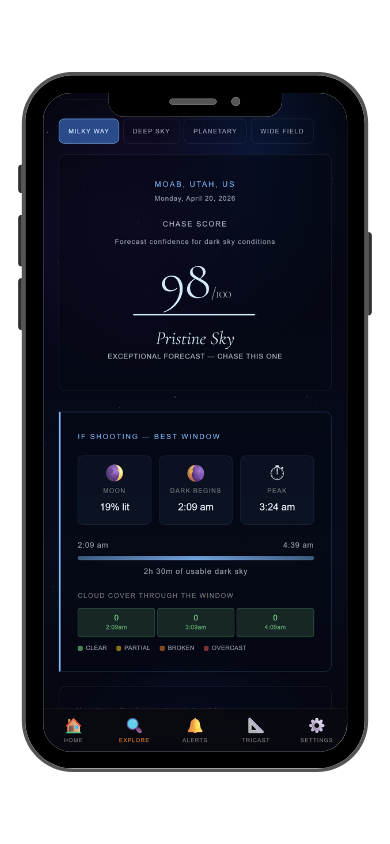
What's in the score
Cloud cover
Moon illumination
Bortle class
Transparency
Humidity

What the app shows you
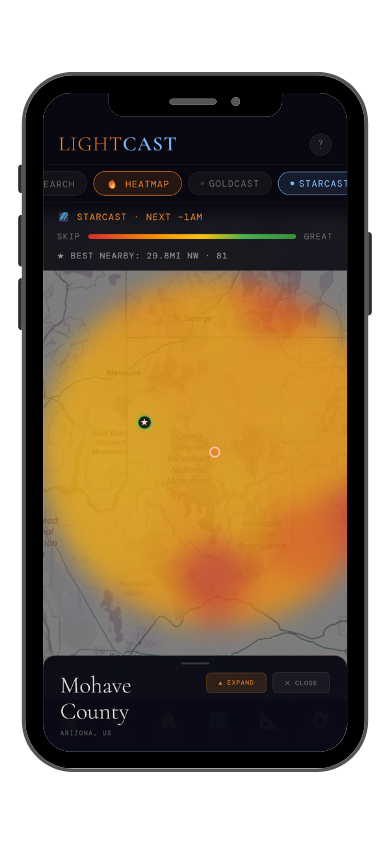
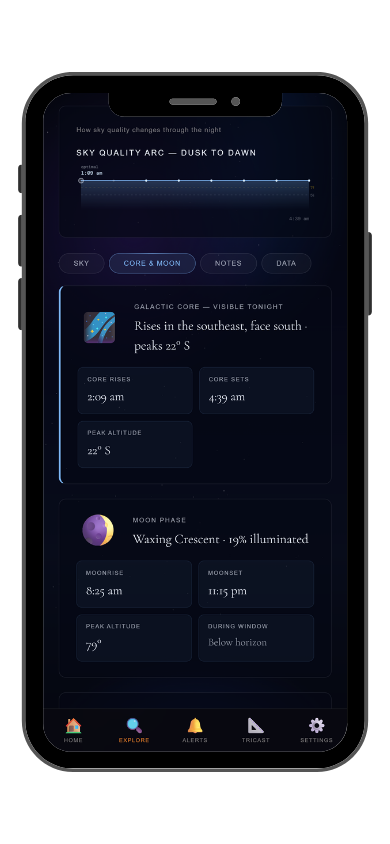
StarCast galactic core forecast
Nearby dark sky locations

Live scores for the night sky, Milky Way Core windows, darker skies nearby, & more
Get LightCast Suite on iOS


Frequently asked
Is tonight good for stargazing at Glacier?
The live score above pulls today's forecast and runs it through StarCast's scoring model, which factors in cloud cover, moon illumination, Bortle class, humidity, and atmospheric transparency. Above 70 is an excellent night. Below 40, conditions are poor. The score updates daily.
What makes Glacier good for astrophotography?
Glacier National Park sits on the Canadian border in one of the darkest regions of the northern Rockies. The glacially carved lakes, including Lake McDonald and St. Mary Lake, provide still water reflection shots with the mountain peaks above. The park's northern latitude means summer nights are short but the Milky Way appears nearly vertical in the sky, creating a distinctive composition. Many Going-to-the-Sun Road pullouts face east across dark valleys. Fall is the best season: longer nights, fewer crowds, and peak foliage on the lower slopes.
When is the Milky Way visible at Glacier?
The galactic core is visible at Glacier from April through September. At this latitude, summer nights are short and astronomical darkness doesn't begin until after 11 PM near solstice, but the core rises in a more vertical orientation that creates unique compositional opportunities. September brings longer nights and fall color simultaneously, making it the most productive month for astrophotography in the park.