StarCast · Grand Canyon, AZ

Night Sky Tonight in Grand Canyon

Reading tonight's sky conditions…
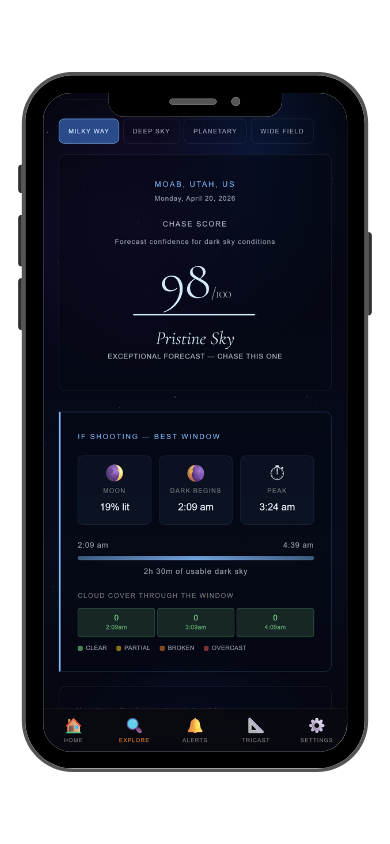
/ 100
Moon
Dark window
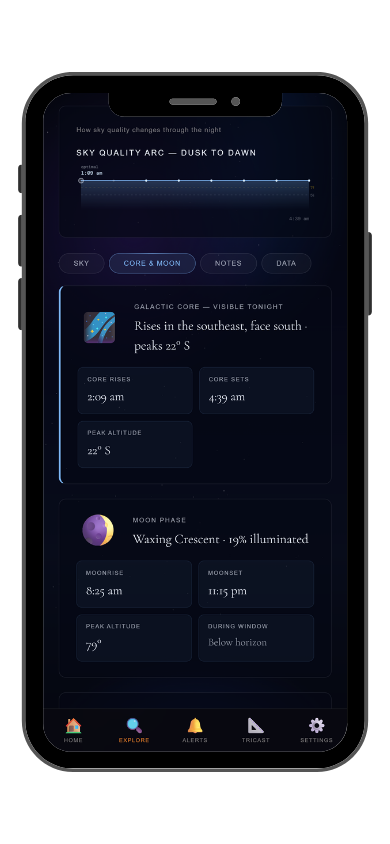
Galactic core
Conditions
Tonight
Bortle class · Grand Canyon
LightCast
Now on iOS
LightCast Suite
Push alerts · 3-day forecast · nearby dark skies

Get notified before clear nights. Set your threshold once and never miss a prime shooting window again.

Download on the App Store
7-day free trial · $2.99/mo · Cancel anytime in App Store
Learn more →

What's in the score
Cloud cover
Moon illumination
Bortle class
Transparency
Humidity

What the app shows you
StarCast galactic core forecast
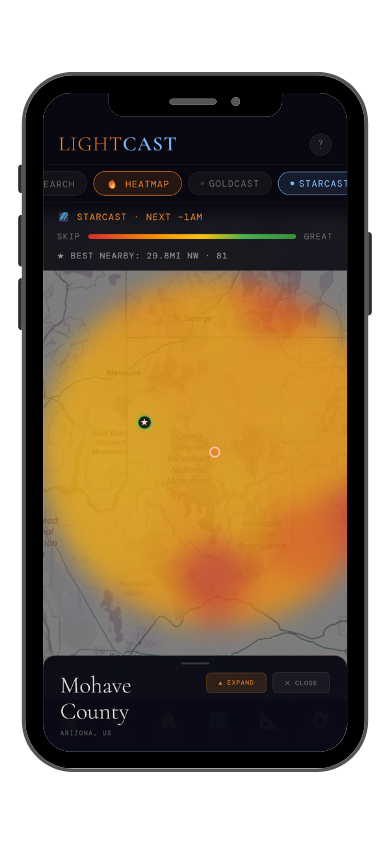
Nearby dark sky locations

Live scores for the night sky, Milky Way Core windows, darker skies nearby, & more
Get LightCast Suite on iOS


Frequently asked
Is tonight good for stargazing at the Grand Canyon?
The live score above pulls today's forecast and runs it through StarCast's scoring model, which factors in cloud cover, moon illumination, Bortle class, humidity, and atmospheric transparency. Above 70 is an excellent night. Below 40, conditions are poor. The score updates daily.
What makes the Grand Canyon good for astrophotography?
Grand Canyon National Park is a Gold Tier International Dark Sky Park, and the canyon rim sits at 7,000 feet with clean high-desert air. The canyon itself acts as a natural light trap, absorbing any scattered glow from the surrounding region. The South Rim viewpoints face south toward the galactic center, and the canyon's scale creates a foreground unlike anything else in astrophotography. Mather Point, Yavapai Point, and Desert View all provide unobstructed southern horizons. The North Rim is even darker but closes in winter.
When is the Milky Way visible at the Grand Canyon?
The galactic core is visible at the Grand Canyon from March through October. The park hosts an annual Star Party in June on the South Rim, one of the largest public astronomy events in the national park system. Spring and fall are the best seasons: comfortable temperatures, lower crowds, and reliable clear nights after weather systems pass through.