Frequently asked
Is tonight good for stargazing at Joshua Tree?
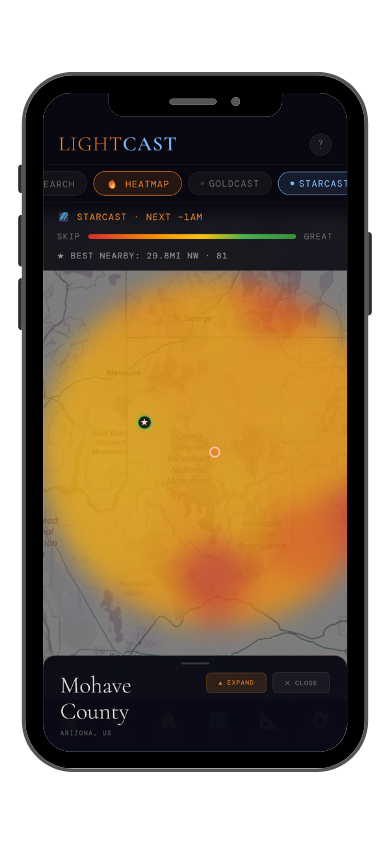
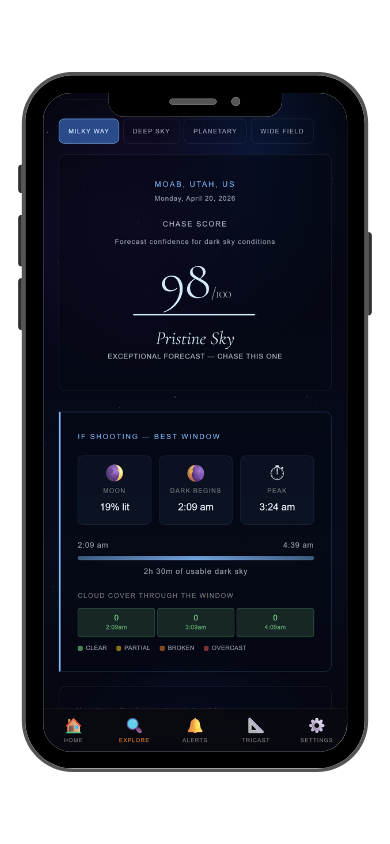
The live score above pulls today's forecast and runs it through StarCast's scoring model, which factors in cloud cover, moon illumination, Bortle class, humidity, and atmospheric transparency. Above 70 is an excellent night. Below 40, conditions are poor. The score updates daily.
What makes Joshua Tree good for astrophotography?
Joshua Tree sits in one of the darkest regions of Southern California, rated Bortle 1 to 2 across most of the park. The high desert air is dry and clear, and the park is far enough from Los Angeles and Palm Springs to escape most light pollution. The Joshua tree silhouettes make for distinctive natural foreground for Milky Way shots. Skull Rock, Arch Rock, and the Cholla Cactus Garden are popular shooting locations.
When is the best time to see the Milky Way at Joshua Tree?
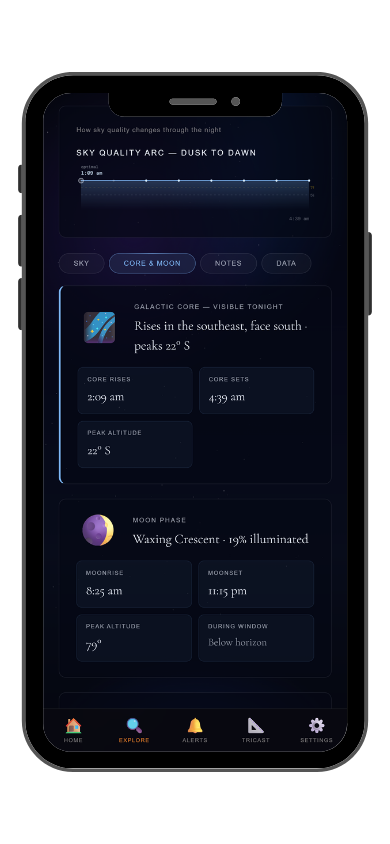
The galactic core is visible at Joshua Tree from approximately March through October. Peak season is May through August when the core rises high in the southern sky after midnight. New moon nights in those months, combined with clear desert air, produce some of the best astrophotography conditions in California. Check the score above before making the drive from LA or Palm Springs.