Frequently asked
Is tonight good for stargazing at Sedona?
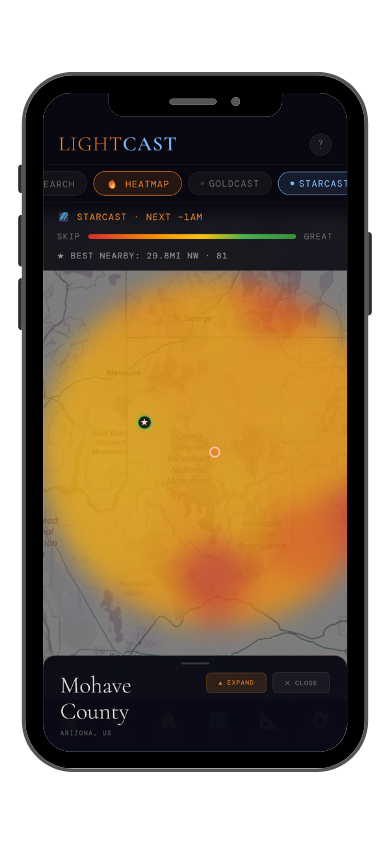
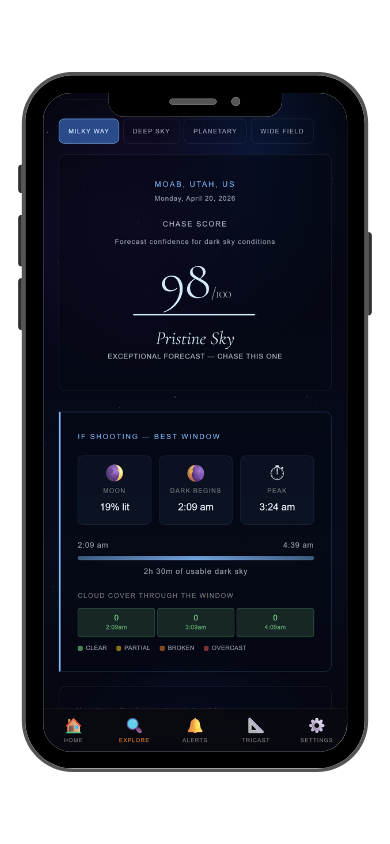
The live score above pulls today's forecast and runs it through StarCast's scoring model, factoring in cloud cover, moon illumination, Bortle class, humidity, and atmospheric transparency. Above 70 is an excellent night. Below 40, conditions are poor. The score updates daily.
What makes Sedona good for astrophotography?
Sedona sits at 4,500 feet in the high Arizona desert with exceptionally dry, clear air and dark skies outside the town core. The red rock formations — Cathedral Rock, Bell Rock, and the buttes of the Courthouse area — make for some of the most dramatic natural foregrounds for Milky Way photography in the Southwest. The surrounding Coconino National Forest is dark enough for serious astrophotography, particularly away from Route 89A. The dry desert atmosphere and low humidity make transparency consistently good from spring through fall.
When is the Milky Way visible at Sedona?
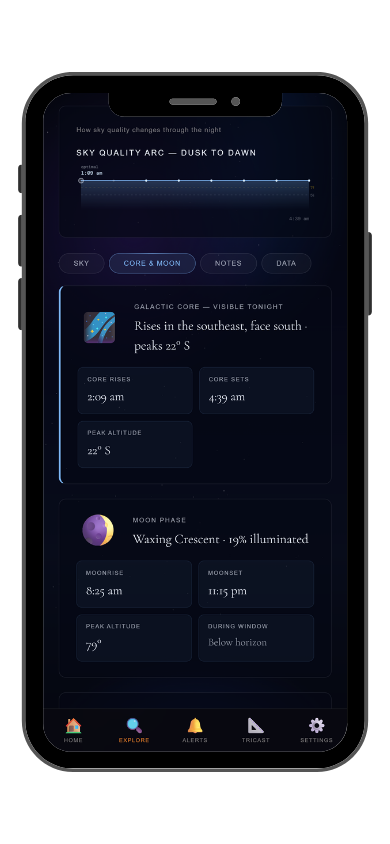
The galactic core is visible from approximately March through October, with peak season from May through August when the core rises high in the southern sky after dark. The red rocks face multiple directions, so the best shooting position depends on the time of year and where the core rises. Cathedral Rock from the south is a classic composition for summer Milky Way shoots.