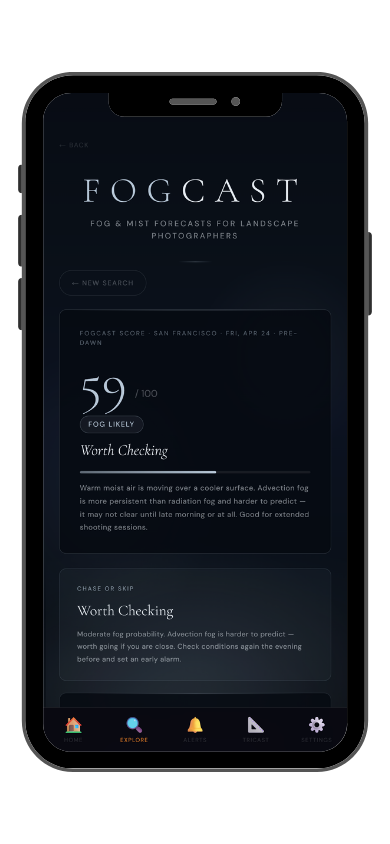
FogCast · Fog Probability Forecast

Fog Photography Tips:
Find It Before You Chase It
The best fog shots come from knowing when fog will form, not driving around hoping to find it. FogCast scores overnight fog probability so you can plan the shoot the night before.
iOS app · $2.99/mo · 7-day free trial · FogCast is app exclusive
What makes fog form
Fog Is Predictable Once You Know What to Check
Radiation fog — the type that fills valleys and drifts across fields at sunrise — forms on calm, clear nights when the surface cools and air temperature drops to the dew point. Four variables drive it: high overnight humidity, a small gap between air temperature and dew point, wind under 5 mph, and clear skies for radiative cooling. Standard weather apps don't surface any of these together.
FogCast — iOS App Only
Common Questions
How do I find fog for photography?
Check the overnight forecast for
humidity above 90%, wind under 5 mph, clear skies, and a dew point within 4°F of air temperature. Recent rain improves the setup. FogCast, exclusive to the
LightCast iOS app, checks all of this automatically and gives you a probability score with timing.
What time is fog photography best?
The window runs from 30 minutes before sunrise through 60–90 minutes after. Before sunrise: dense and still. At sunrise: dramatic backlit quality. After sunrise: the burn-off phase produces the most dynamic imagery as fog breaks into drifting patches. FogCast shows the estimated burn-off window for your location.
What season is best for fog photography?
Autumn is the strongest fog season for most inland locations. Warm days evaporate moisture from the ground, and cool nights condense it. Spring is second. Summer nights are usually too warm; winter often too cold and dry for radiation fog.
What camera settings should I use for fog?
Expose to the right (fog is bright, meters underexpose). Shoot RAW. f/4 to f/8 for soft, diffuse rendering. Slight clarity and contrast boost in post restores depth. A polariser reduces flat grey cast in heavy fog.
Plan the shoot the night before.
Fog probability score · Formation & burn-off timing · Push notifications
Saved locations · FogCast, CloudCast + all tools
Download LightCast for iOS
$2.99/mo after 7-day free trial · Cancel anytime in App Store
Want to learn more about how FogCast works?
See how FogCast predicts fog →