Frequently asked
Is tonight good for stargazing at Big Bend Ranch State Park?
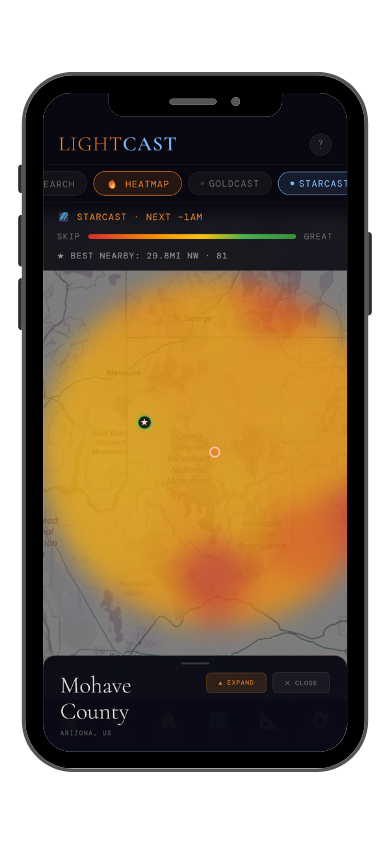
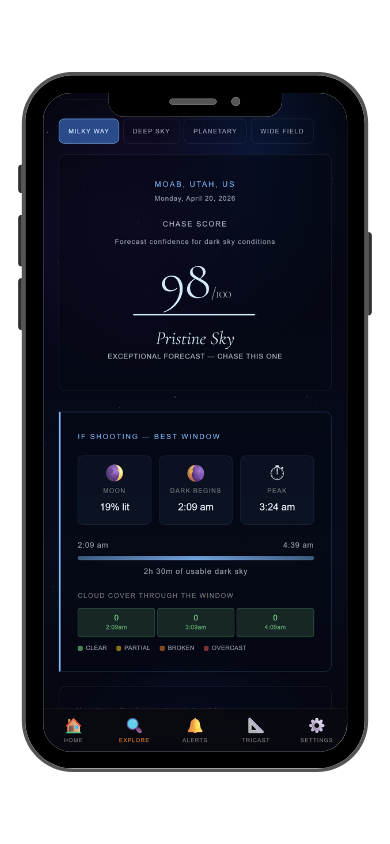
The live score above pulls today's forecast and runs it through StarCast's scoring model, factoring in cloud cover, moon illumination, Bortle class, humidity, and atmospheric transparency. Above 70 is an excellent night. Below 40, conditions are poor. The score updates daily.
What makes Big Bend Ranch State Park good for astrophotography?
Big Bend Ranch State Park is Texas's largest state park at over 311,000 acres, sitting west of Big Bend National Park along the Rio Grande in the Chihuahuan Desert. It is part of the Greater Big Bend International Dark Sky Reserve and sees Bortle Class 1 to 2 conditions, among the darkest in the entire state. Elevations across the park range from 2,400 to 4,700 feet. The park receives fewer visitors than adjacent Big Bend National Park, meaning genuinely uncrowded dark sky access. The Solitario, a collapsed volcanic caldera in the park's interior, and the Rio Grande canyon provide dramatic geological foregrounds. The combination of extreme isolation, low humidity, and consistent clear skies makes this one of the top astrophotography destinations in the American South.
When is the Milky Way visible at Big Bend Ranch?
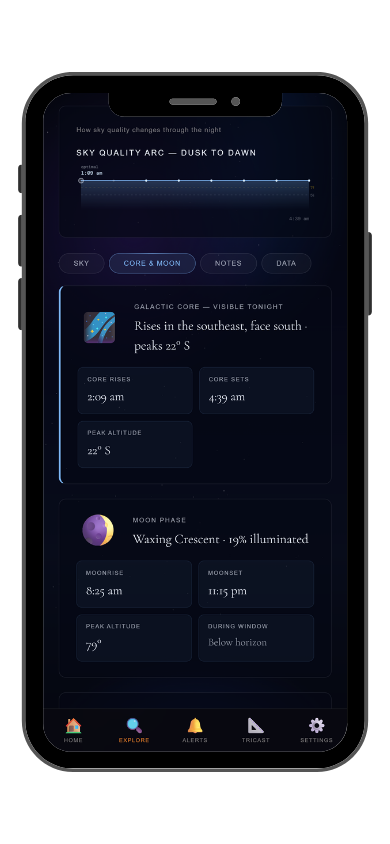
The galactic core is visible from March through October, with May through August producing the best galactic center positioning. The Trans-Pecos desert climate delivers clear skies the majority of nights, with the summer monsoon from July through early September the primary exception. The park has limited infrastructure, so fuel and supplies should be arranged in Presidio or Study Butte before entering. The Fresno Canyon and Ojito Adentro areas are particularly popular with photographers.