StarCast · Monument Valley, AZ

Night Sky Tonight in Monument Valley

Reading tonight's sky conditions…
/ 100
Moon
Dark window
Galactic core
Conditions
Tonight
Bortle class · Monument Valley
LightCast
Now on iOS
LightCast Suite
Push alerts · 3-day forecast · nearby dark skies

Get notified before clear nights. Set your threshold once and never miss a prime shooting window again.

Download on the App Store
7-day free trial · $2.99/mo · Cancel anytime in App Store
Learn more →

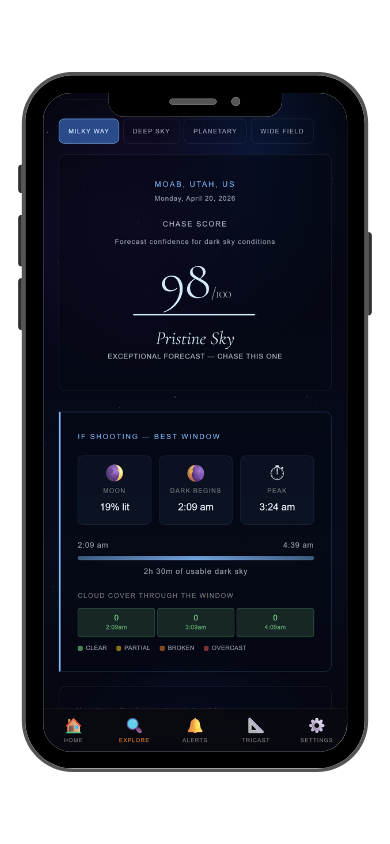
What's in the score
Cloud cover
Moon illumination
Bortle class
Transparency
Humidity

What the app shows you
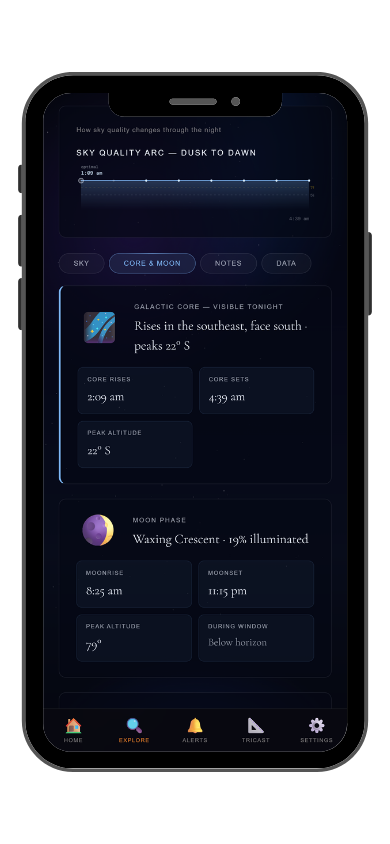
StarCast galactic core forecast
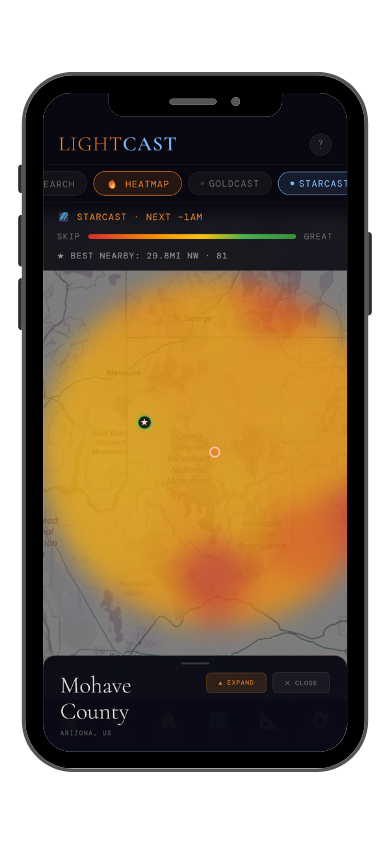
Nearby dark sky locations

Live scores for the night sky, Milky Way Core windows, darker skies nearby, & more
Get LightCast Suite on iOS


Also for Phoenix
GoldCast
Sunset conditions tonight in Phoenix
Check sunset →

Frequently asked
Is tonight good for stargazing at Monument Valley?
The live score above pulls today's forecast and runs it through StarCast's scoring model, factoring in cloud cover, moon illumination, Bortle class, humidity, and atmospheric transparency. Above 70 is an excellent night. Below 40, conditions are poor. The score updates daily.
What makes Monument Valley good for astrophotography?
Monument Valley sits in one of the darkest regions of the continental United States, rated Bortle 1 in the surrounding Navajo Nation land. The iconic sandstone mittens and buttes rising 1,000 feet from the valley floor are among the most recognizable silhouettes on earth, and under a Milky Way they're extraordinary. The high desert at 5,500 feet has dry, transparent air and minimal light pollution in every direction. The John Ford Point overlook and the valley floor both face south toward the galactic center during summer.
When is the Milky Way visible at Monument Valley?
The galactic core is visible from March through October. Summer new moon nights are the target: the core rises high in the south, the air is dry, and the buttes are fully lit by starlight alone. Photography inside the tribal park requires coordination with Navajo Nation permits; the overlook viewpoints are accessible without permits and give clear southern exposures.