Frequently asked
Is tonight good for stargazing at Big Cypress?
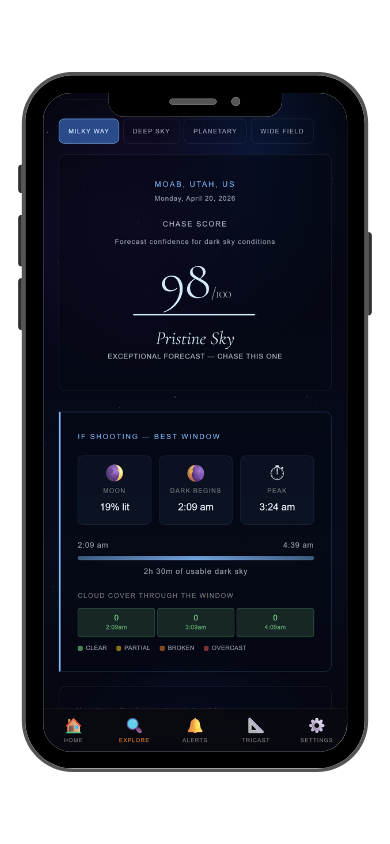
The live score above pulls today's forecast and runs it through StarCast's scoring model, factoring in cloud cover, moon illumination, Bortle class, humidity, and atmospheric transparency. Above 70 is an excellent night. Below 40, conditions are poor. The score updates daily.
What makes Big Cypress good for astrophotography?
Big Cypress National Preserve is the only serious dark sky option in South Florida, surrounded on all sides by protected public land including Everglades National Park to the south. The preserve covers 729,000 acres of subtropical wilderness in southwestern Florida. Distance from Miami, Naples, and Fort Lauderdale reduces the light dome impact significantly compared to most of the Florida peninsula. The cypress swamps, sawgrass prairies, and open sloughs provide reflective water foregrounds with a subtropical atmosphere unlike any other dark sky site in the country. The preserve is designated as an International Dark Sky Park. Humidity is the main atmospheric variable to watch.
When is the Milky Way visible at Big Cypress?
The galactic core is visible from March through October. The best stargazing conditions fall in winter, from November through April, when humidity drops, bug activity decreases significantly, and convective cloud cover from afternoon heating is far less frequent. Summer in the Everglades region brings intense heat, daily afternoon thunderstorms, and high humidity that can degrade atmospheric transparency. Winter visits offer the most reliable clear skies and are far more comfortable.