Frequently asked
Is tonight good for stargazing at Big Sur?
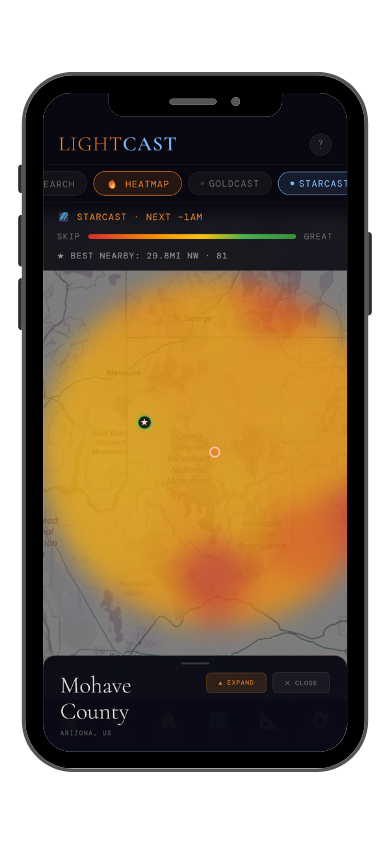
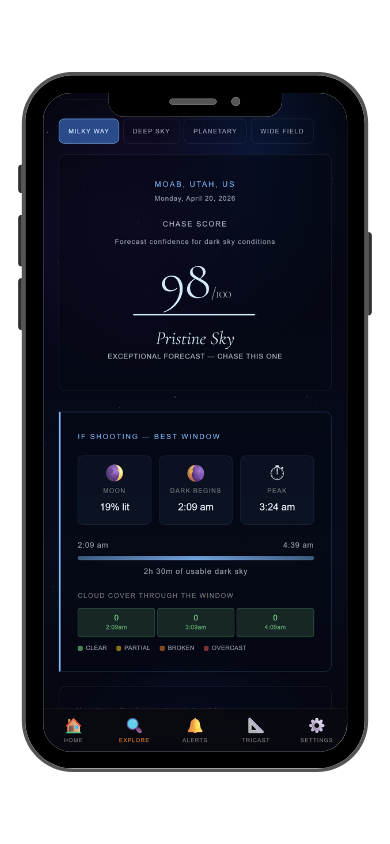
The live score above pulls today's forecast and runs it through StarCast's scoring model, which factors in cloud cover, moon illumination, Bortle class, humidity, and atmospheric transparency. Above 70 is an excellent night. Below 40, conditions are poor. The score updates daily.
What makes Big Sur good for astrophotography?
Big Sur's combination of Pacific coastline, redwood canyons, and dramatic cliffs is hard to beat as a Milky Way foreground. McWay Falls, Bixby Creek Bridge, and the Pfeiffer Beach sea stacks are signature locations. The coast faces due west, so ocean horizons stay dark and the galactic arc rises over the hills to the southeast. Marine fog is the primary obstacle: it rolls in most nights from May through July, but when it clears, conditions can go from zero to perfect in under an hour. Shooting from ridge elevation eliminates most of the fog risk.
When is the Milky Way visible at Big Sur?
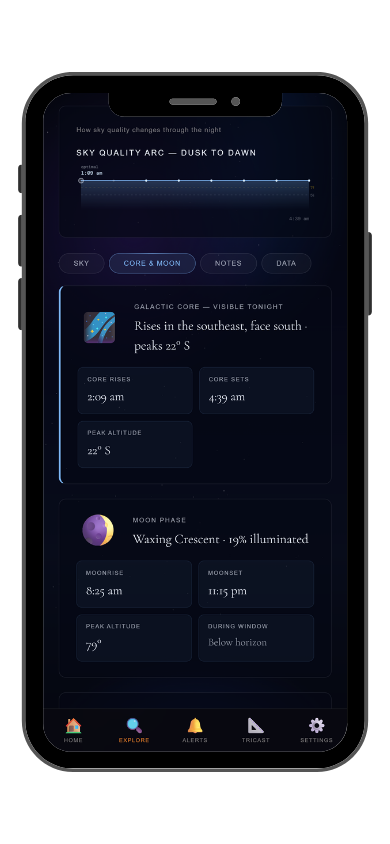
The galactic core is visible from March through October. August and September tend to offer the most reliable clear nights as the marine layer weakens. Spring brings green hillsides and wildflowers but heavier fog. Highway 1 closures from storm damage and landslides are common after winter: always check Caltrans road conditions before planning an overnight trip.