StarCast · Bonneville Salt Flats, UT

Night Sky Tonight in Bonneville Salt Flats

Reading tonight's sky conditions…
/ 100
Moon
Dark window
Galactic core
Conditions
Tonight
Bortle class
LightCast
Now on iOS
LightCast Suite
Push alerts · 3-day forecast · nearby dark skies

Get notified before clear nights. Set your threshold once and never miss a prime shooting window again.

Download on the App Store
7-day free trial · $2.99/mo · Cancel anytime in App Store
Learn more →

What's in the score
Cloud cover
Moon illumination
Bortle class
Transparency
Humidity

What the app shows you
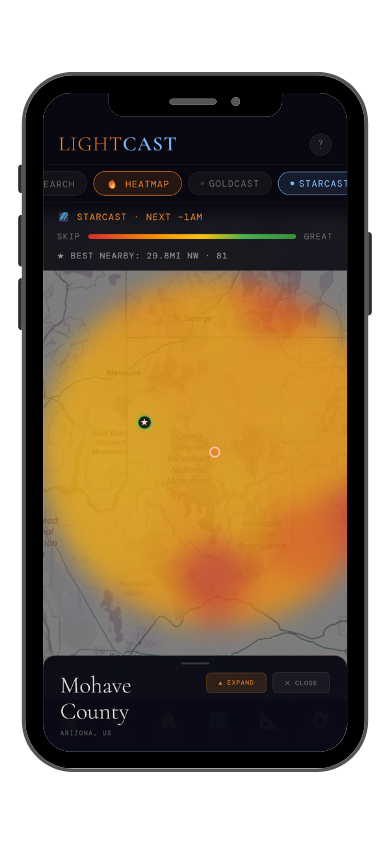
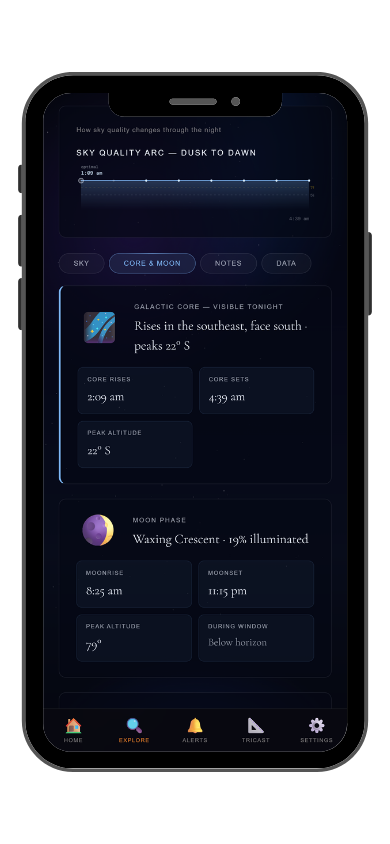
StarCast galactic core forecast
Nearby dark sky locations

Live scores for the night sky, Milky Way Core windows, darker skies nearby, & more
Get LightCast Suite on iOS


Frequently asked
Is tonight good for stargazing at Bonneville Salt Flats?
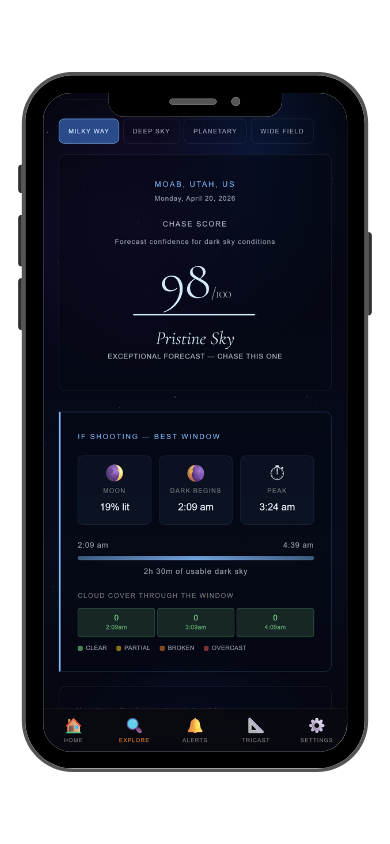
The live score above pulls today's forecast and runs it through StarCast's scoring model, which factors in cloud cover, moon illumination, Bortle class, humidity, and atmospheric transparency. Above 70 is an excellent night. Below 40, conditions are poor. The score updates daily.
What makes Bonneville Salt Flats good for astrophotography?
The Bonneville Salt Flats deliver a reflection photography opportunity that rivals Salar de Uyuni in Bolivia at a fraction of the travel cost. After rain, a thin layer of water sits on the salt crust and creates a mirror surface that reflects the sky almost perfectly. The flats are completely flat for miles in every direction, which means the horizon-to-horizon star reflection works from any position. The isolation from Salt Lake City and Wendover keeps light pollution manageable to the east, and the western and southern horizons are dark. The surface is accessible by vehicle and walkable in dry conditions.
When is the Milky Way visible at Bonneville Salt Flats?
The galactic core is visible from April through October. The reflection effect requires rain within the past several days: late winter and spring are the most reliable for water on the surface, which overlaps with early Milky Way season. Summer is dry and the reflection disappears, but the star photography still works on the bright white salt surface. Check recent satellite imagery or trip reports before making the drive specifically for reflections.