Frequently asked
Is tonight good for stargazing at Bosque del Apache?
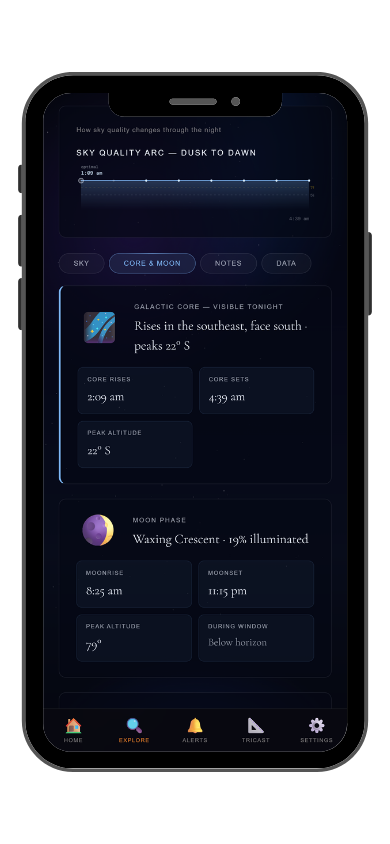
The live score above pulls today's forecast and runs it through StarCast's scoring model, factoring in cloud cover, moon illumination, Bortle class, humidity, and atmospheric transparency. Above 70 is an excellent night. Below 40, conditions are poor. The score updates daily.
What makes Bosque del Apache good for astrophotography?
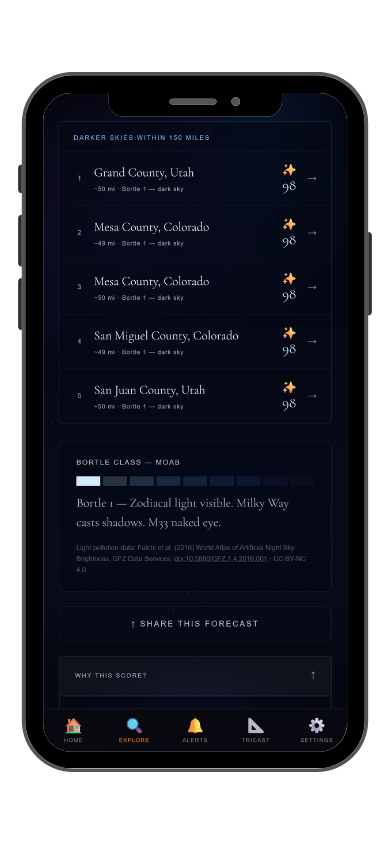
Bosque del Apache National Wildlife Refuge sits along the Rio Grande in central New Mexico, 100 miles south of Albuquerque. The refuge is best known for its winter sandhill crane migration, but the skies above it are genuinely dark: Socorro, the nearest town, is small, and the surrounding desert and mountains block most regional light. The refuge's flat wetlands and open water create strong reflection opportunities for night sky photography when conditions allow. The area sits at around 4,500 feet with the San Mateo Mountains to the west, which often stabilizes the atmosphere overnight.
When is the Milky Way visible at Bosque del Apache?
The galactic core is visible from March through October. New Mexico's Rio Grande valley is one of the drier regions in the country for astrophotography: monsoon season (July to mid-August) brings some cloud cover, but the rest of the year is reliably clear. The core transits nearly overhead in summer, giving a wide angle above the flat wetlands. Fall and winter visits overlap with crane migration, which is worth planning around if wildlife photography is also on your list.