Frequently asked
Is tonight good for stargazing near Bozeman?
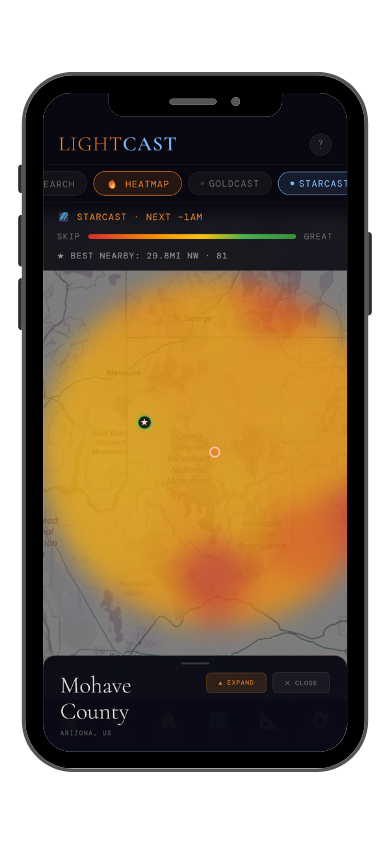
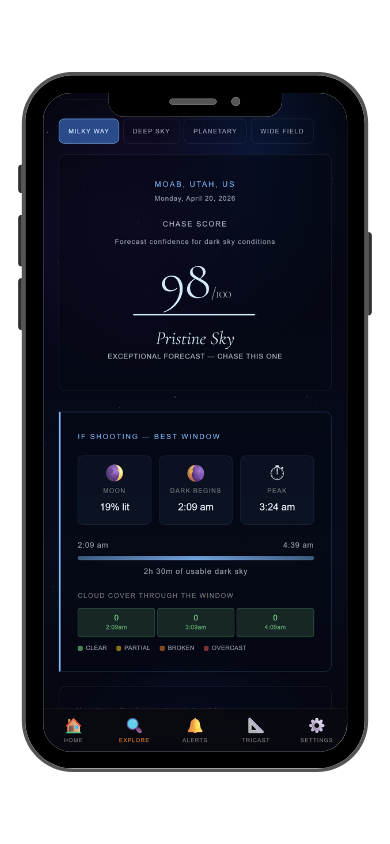
The live score above pulls today's forecast and runs it through StarCast's scoring model, factoring in cloud cover, moon illumination, Bortle class, humidity, and atmospheric transparency. Above 70 is an excellent night. Below 40, conditions are poor. The score updates daily.
What makes the Bozeman area good for astrophotography?
Bozeman sits in the Gallatin Valley at 4,820 feet, flanked by the Bridger Range to the north and the Gallatin Range to the south. The city itself produces a light dome, but within 20 to 30 minutes of driving south toward Gallatin Canyon or east toward the Crazy Mountains, conditions improve rapidly to Bortle Class 3 or darker. The surrounding Gallatin National Forest, Beartooth Plateau, and proximity to Yellowstone give photographers access to some of the most dramatic mountain dark sky foregrounds in the West. The Hyalite Canyon area south of town is a popular local astrophotography destination with reservoir reflections and high-elevation terrain. Montana's low population density and dry continental climate mean clear nights are frequent.
When is the Milky Way visible near Bozeman?
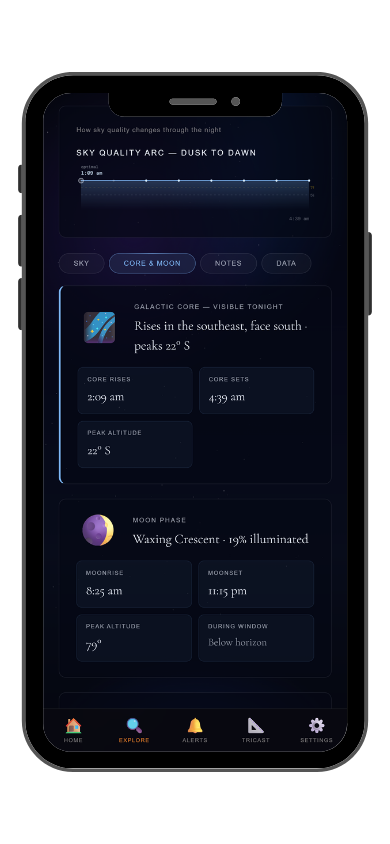
The galactic core is visible from April through October, with the peak running June through August. Montana summers deliver long twilight windows and shorter true darkness periods, but the galactic center is well-positioned in the southern sky when it does get dark. Fall brings earlier darkness and reliably clear skies before winter sets in. Wildfire smoke from August through September can occasionally affect transparency, so checking atmospheric conditions before shooting is worth the effort.