Frequently asked
Is tonight good for stargazing in Buena Vista?
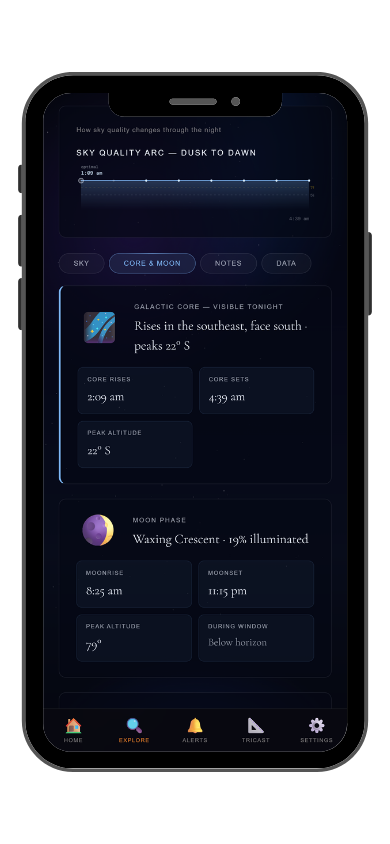
The live score above pulls today's forecast and runs it through StarCast's scoring model, factoring in cloud cover, moon illumination, Bortle class, humidity, and atmospheric transparency. Above 70 is an excellent night for astrophotography. Below 40, conditions are poor. The score updates daily.
What makes Buena Vista good for astrophotography?
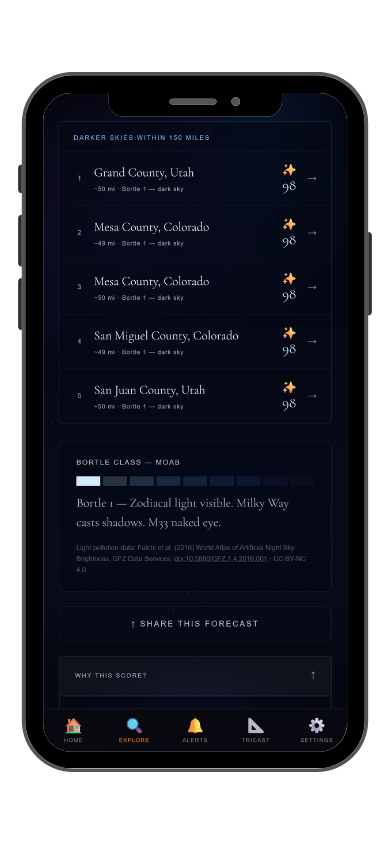
Buena Vista sits at 7,900 feet in the Arkansas River valley of central Colorado, at the foot of the Collegiate Peaks — a row of fourteeners including Mount Harvard, Mount Yale, Mount Oxford, and Mount Columbia. The combination of a high-altitude valley floor and 14,000-foot peaks directly above makes the terrain contrast here among the most dramatic in the Rocky Mountains. Bortle Class 3 skies are accessible within minutes of town, and the Arkansas River and Collegiate Peaks Wilderness create reflection and mountain foreground opportunities that are difficult to match in the region. The valley's relatively low precipitation compared to higher terrain and its distance from any major city keep the sky reliably dark. The Browns Canyon National Monument to the south adds canyon foreground options.
When is the Milky Way visible in Buena Vista?
The galactic core is visible from late March through early October. Buena Vista's valley floor position gives it more stable seeing than the high passes above, and the Collegiate Peaks remain snowcapped well into June, offering a snow-and-stars foreground composition early in the season. Prime astrophotography season is May through September, with June and early July offering the best combination of high core altitude and pre-monsoon atmospheric stability. The Arkansas River's calm sections below town provide water reflection possibilities. New moon weekends in June are a particularly popular time for photographers targeting the peaks-over-river composition.