Frequently asked
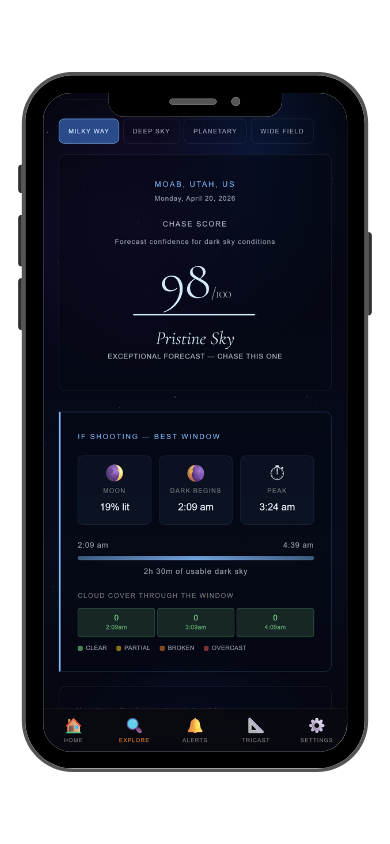
Is tonight good for stargazing at Cairngorms?
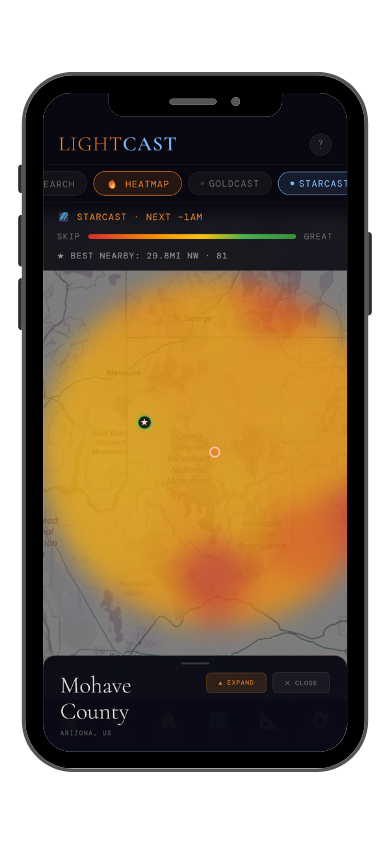
The live score above pulls today's forecast and runs it through StarCast's scoring model, factoring in cloud cover, moon illumination, Bortle class, humidity, and atmospheric transparency. Above 70 is an excellent night. Below 40, conditions are poor. The score updates daily.
What makes Cairngorms good for astrophotography?
Cairngorms National Park is the largest national park in the UK, covering 4,528 square kilometers of sub-arctic plateau, native Caledonian pinewoods, and river straths in the Scottish Highlands. The park encompasses the highest massif in the British Isles: five of Scotland's six highest peaks are within its boundary. The high plateau above 900 meters is reliably above any valley haze and fog. Aviemore is the main access town but small enough to produce only a local glow. Loch Morlich and the Rothiemurchus Forest are the most popular night sky photography locations, with the pine forest silhouette and the high Cairngorm plateau as background.
When is the Milky Way visible at Cairngorms?
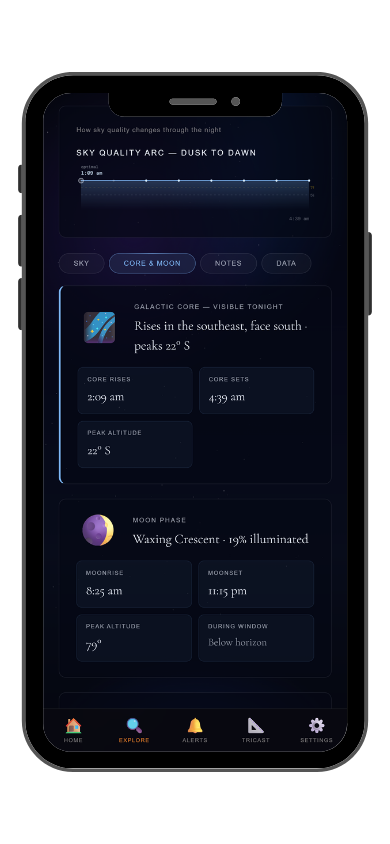
The galactic core is visible from March through October. The eastern Cairngorms and Speyside tend to be drier than the west-facing slopes due to the rain shadow from the western Highlands. April through September is the main Milky Way window, with the core visible in the south during the hours of astronomical darkness. The high plateau is accessible by the Cairngorm Mountain funicular (when operational) and on foot from the car parks. Winter aurora displays over the snowy plateau and pine forests are among the most atmospheric night sky scenes in the British Isles.