Frequently asked
Is tonight good for stargazing at Cedar Breaks?
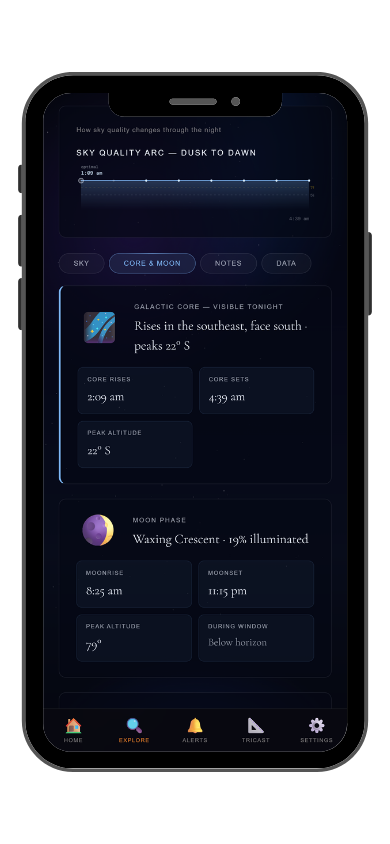
The live score above pulls today's forecast and runs it through StarCast's scoring model, factoring in cloud cover, moon illumination, Bortle class, humidity, and atmospheric transparency. Above 70 is an excellent night. Below 40, conditions are poor. The score updates daily.
What makes Cedar Breaks good for astrophotography?
Cedar Breaks National Monument sits at 10,000 feet on the edge of the Colorado Plateau, which puts photographers above most atmospheric moisture and far above the light dome of St. George 75 miles to the south. It was designated an International Dark Sky Park in 2017. The three-mile-wide amphitheater of eroded hoodoos glows in shades of red, orange, and purple, and at elevation, stars appear with a clarity that's hard to match at lower sites in the region. The visitor center area has a dedicated astronomy viewing spot used for the annual Night Sky Festival each July.
When is the Milky Way visible at Cedar Breaks?
The galactic core is visible from April through October. The road to Cedar Breaks typically opens in late May, which aligns well with the start of peak Milky Way season. The core rises in the southeast and clears the amphitheater rim by late evening in June and July. Snow can persist at the rim well into June, so check road conditions before planning a late spring shoot. Summer nights drop into the 40s even in July, so bring layers.