Frequently asked
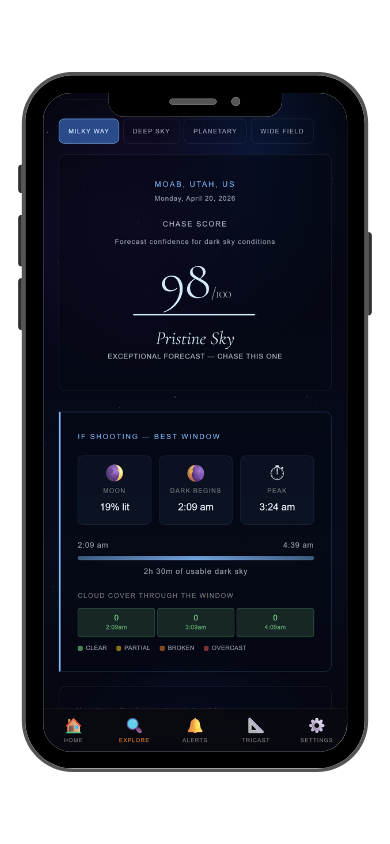
Is tonight good for stargazing at Congaree National Park?
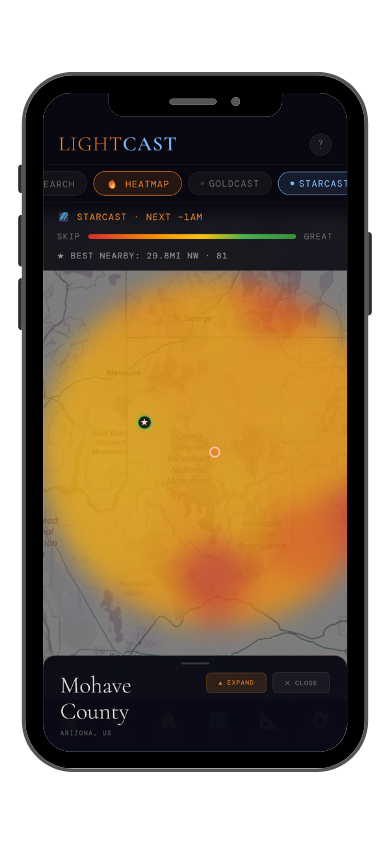
The live score above pulls today's forecast and runs it through StarCast's scoring model, factoring in cloud cover, moon illumination, Bortle class, humidity, and atmospheric transparency. Above 70 is an excellent night. Below 40, conditions are poor. The score updates daily.
What makes Congaree National Park good for astrophotography?
Congaree National Park protects the largest intact expanse of old-growth bottomland hardwood forest in the southeastern United States, located in central South Carolina. It is a certified International Dark Sky Park — one of very few in the eastern US — with Bortle Class 4 to 5 skies that offer substantially darker conditions than the surrounding suburban and agricultural landscape between Columbia and Charleston. The park is renowned for its synchronous firefly displays in late spring, when thousands of fireflies flash in unison across the floodplain forest in one of the most extraordinary natural light shows in North America. Astrophotographers shooting during firefly season can capture both the natural bioluminescent displays and the night sky in the same frame. The towering cypress and tupelo trees draped in Spanish moss create a distinctively southern foreground.
When is the Milky Way visible at Congaree National Park?
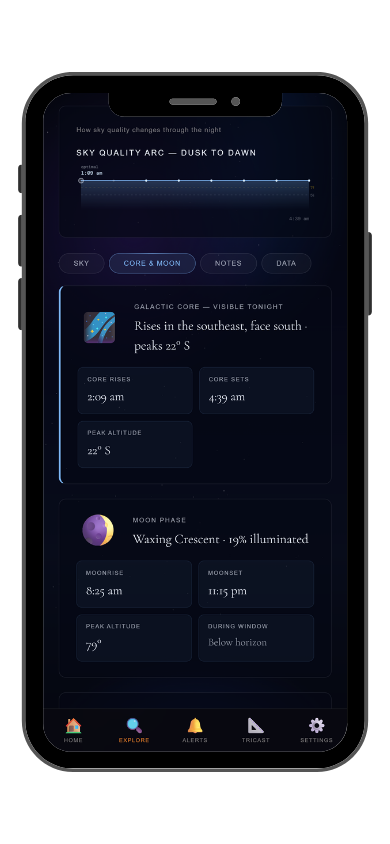
The galactic core is visible from April through October, with June through August offering the highest arc in the southern sky. The synchronous firefly peak typically runs for one to two weeks in late May or early June and is one of the most anticipated natural events in the Southeast — permits are required for access during this period. South Carolina's humid subtropical climate brings variable cloud cover year-round, with fall typically delivering the most consistent clear nights. Humidity can affect atmospheric transparency even on nominally clear nights, so high-scoring evenings are especially worth prioritizing.