Astrophotography at Death Valley
Death Valley holds Gold Tier International Dark Sky Park status, with Bortle 1 skies across its most remote areas. At 282 feet below sea level, the basin is surrounded by mountain ranges that block horizon glow from Las Vegas to the east and the California coast to the west. The desert air is dry enough that transparency is exceptional year-round.
The best foregrounds are spread across the park. Mesquite Flat Sand Dunes photograph well from two hours after dark through moonrise. Badwater Basin's salt flats produce strong reflections on humid winter nights. Zabriskie Point and Dante's View give elevated vantage points with the valley floor far below.
Spring and fall are the practical shooting seasons: the galactic core is well-positioned and overnight temperatures are survivable. Summer valley floor temps regularly exceed 120°F, making pre-dawn shoots genuinely dangerous without planning. November through February is cold but reliably clear, with strong star trail conditions over the dunes.
Frequently asked
Is tonight good for stargazing at Death Valley?
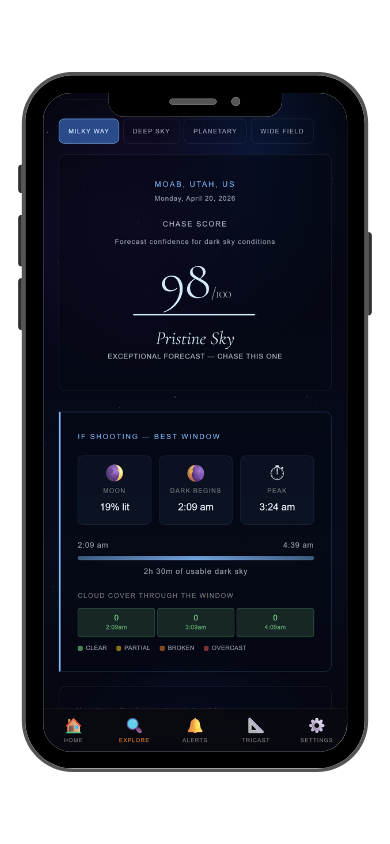
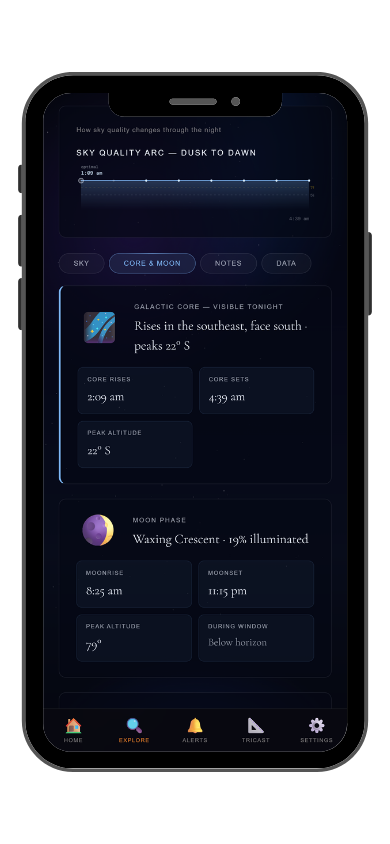
The live score above pulls today's forecast and runs it through StarCast's scoring model, which factors in cloud cover, moon illumination, Bortle class, humidity, and atmospheric transparency. Above 70 is an excellent night. Below 40, conditions are poor. The score updates daily.
What makes Death Valley good for astrophotography?
Death Valley is one of the darkest places in the continental United States, with Bortle 1 ratings across much of the park. The desert air is exceptionally dry, and the park's remoteness from major cities means minimal light pollution on the horizon. The salt flats at Badwater Basin, the sand dunes at Mesquite Flat, and the rock formations at Zabriskie Point all provide striking foreground for night sky photography. November through March is the best season — summer temperatures make overnight shooting dangerous.
When is the Milky Way visible at Death Valley?
The galactic core is visible at Death Valley from March through October, with peak season in May through August when the core rises high in the southern sky. New moon weekends in spring draw astrophotographers from across California and Nevada. The Harmony Borax Works and Artist's Palette areas are popular locations for combining geological color with night sky shots.