Frequently asked
Is tonight good for stargazing at Dry Tortugas National Park?
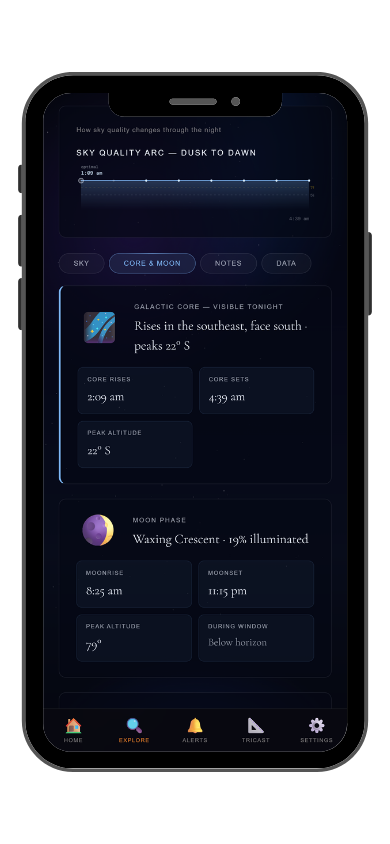
The live score above pulls today's forecast and runs it through StarCast's scoring model, factoring in cloud cover, moon illumination, Bortle class, humidity, and atmospheric transparency. Above 70 is an excellent night. Below 40, conditions are poor. The score updates daily.
What makes Dry Tortugas National Park good for astrophotography?
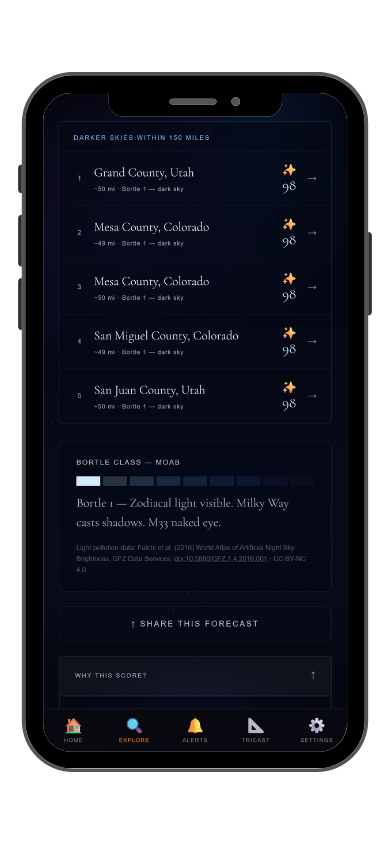
Dry Tortugas National Park sits 70 miles west of Key West in the Gulf of Mexico, accessible only by ferry or seaplane. The park's extreme isolation from Florida's heavily developed coastline produces Bortle Class 2 to 3 skies — among the darkest in the eastern United States — with a completely open ocean horizon in nearly every direction. Fort Jefferson, a massive 19th-century masonry fortress built on a tiny coral island, is one of the most unique and dramatic astrophotography foreground subjects in the country. The combination of dark tropical skies, the ancient brick fortress walls rising from the sea, and the reflection of stars in the surrounding shallow waters creates compositions impossible to replicate anywhere else in the US.
When is the Milky Way visible at Dry Tortugas National Park?
The galactic core is visible from approximately March through October, with the low southern latitude providing an exceptionally high and bright Milky Way arc in summer. The tropical climate brings frequent cloud cover, especially in summer, when afternoon convective storms are common. The drier winter months offer more consistent clear nights, though the galactic core is below the horizon. Campers staying overnight on Garden Key have the best access to the full nighttime sky. Advance ferry reservations and camping permits are required, and the limited access makes planning essential.