Frequently asked
Is tonight good for stargazing at Escalante?
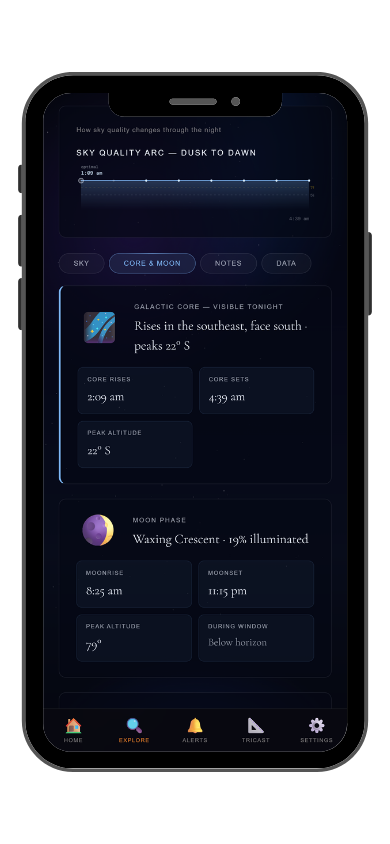
The live score above pulls today's forecast and runs it through StarCast's scoring model, factoring in cloud cover, moon illumination, Bortle class, humidity, and atmospheric transparency. Above 70 is an excellent night. Below 40, conditions are poor. The score updates daily.
What makes Escalante good for astrophotography?
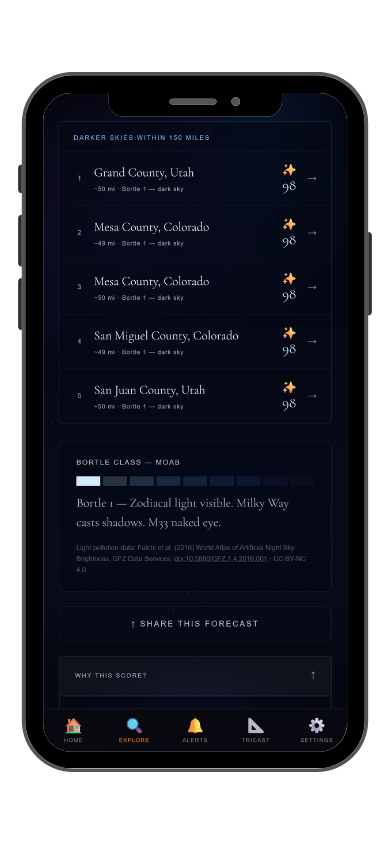
Grand Staircase-Escalante National Monument covers nearly 1.9 million acres of southern Utah with almost no development and no towns of any significance inside its boundaries. The region ranks among the darkest in the contiguous United States, with wide stretches of Bortle Class 1 sky accessible by dirt road. Slot canyons, arch formations, and sandstone benches give photographers an enormous variety of foreground options within a single area. Kodachrome Basin State Park, Calf Creek Falls, and the Hole-in-the-Rock Road are all within the monument's reach and offer different shooting environments.
When is the Milky Way visible at Escalante?
The galactic core is visible from March through October. The combination of Bortle Class 1 skies and a dry high-desert climate makes late spring and early fall particularly productive. July and August bring monsoon moisture that can cloud out evenings unpredictably, though clearing storms occasionally produce dramatic skies. Many of the best shooting locations require hiking or driving unpaved roads: check conditions before heading in, especially after rain.