Frequently asked
Is tonight good for stargazing at Eureka Dunes?
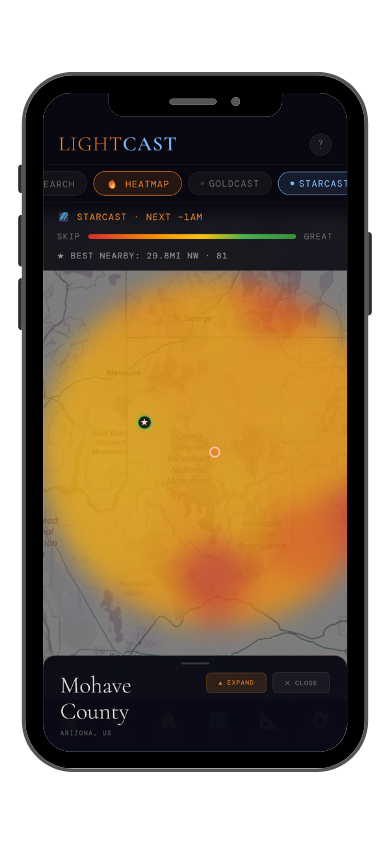
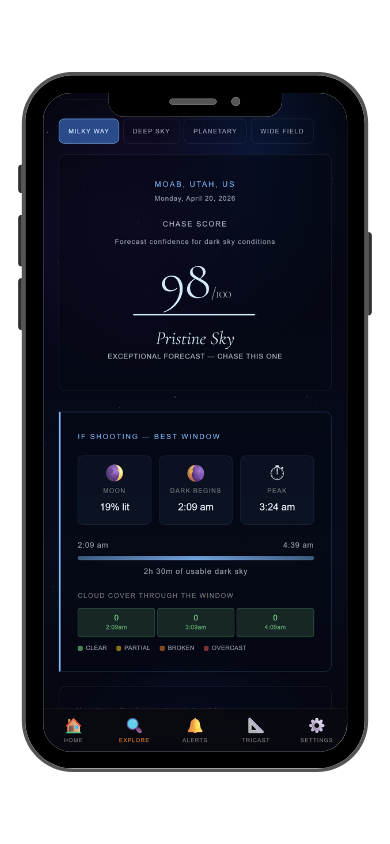
The live score above pulls today's forecast and runs it through StarCast's scoring model, factoring in cloud cover, moon illumination, Bortle class, humidity, and atmospheric transparency. Above 70 is an excellent night for astrophotography. Below 40, conditions are poor. The score updates daily.
What makes Eureka Dunes good for astrophotography?
Eureka Dunes sits in a remote, rarely visited corner of Death Valley National Park, which holds Gold Tier International Dark Sky Park status, the highest level of darkness certification. The dunes themselves rise nearly 700 feet, the tallest in California and among the tallest in North America, and are known for producing a low booming sound when sand slides down the steep faces. Reaching the site requires a long dirt road drive far from any town, and that isolation pushes skies here to roughly Bortle Class 1, about as dark as conditions get anywhere in the state.
When is the Milky Way visible at Eureka Dunes?
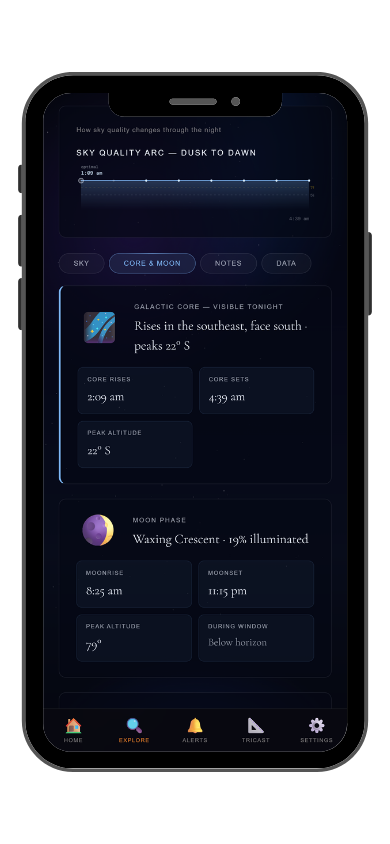
The core is visible from late February through October. Spring and fall are by far the most comfortable seasons for the long, remote drive and for time spent out on open sand, since summer daytime temperatures at this low desert elevation can be dangerous. Bring extra water, fuel, and a proper vehicle for the dirt road regardless of season, services are not nearby.