Frequently asked
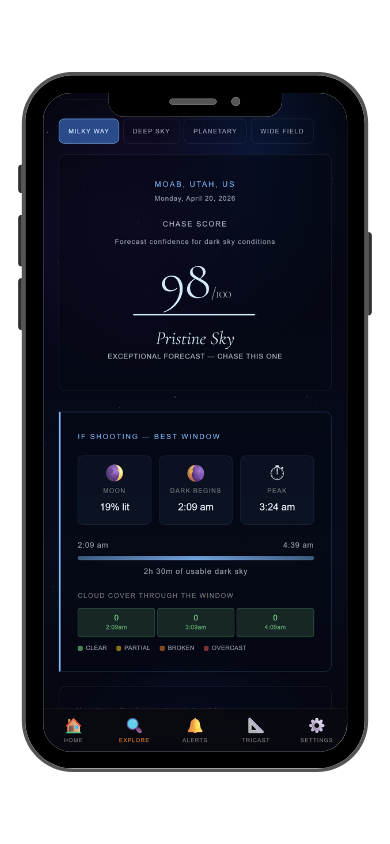
Is tonight good for stargazing at Fort Davis National Historic Site?
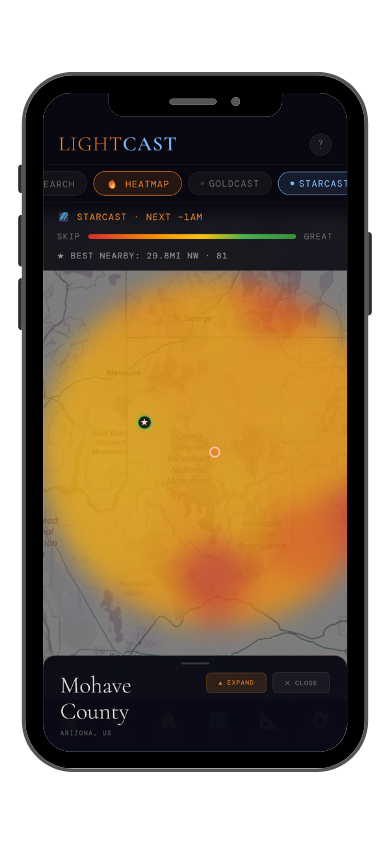
The live score above pulls today's forecast and runs it through StarCast's scoring model, factoring in cloud cover, moon illumination, Bortle class, humidity, and atmospheric transparency. Above 70 is an excellent night. Below 40, conditions are poor. The score updates daily.
What makes Fort Davis National Historic Site good for astrophotography?
Fort Davis National Historic Site sits in the Davis Mountains of far west Texas, the most isolated mountain range in the contiguous United States and one of the premier dark sky regions in North America. The fort is adjacent to the McDonald Observatory, one of the world's leading astronomical research facilities, whose presence in this location reflects the extraordinary sky quality of the region. Bortle Class 1 to 2 skies are common across the Davis Mountains area, with no significant city within 100 miles in any direction. The restored stone and adobe ruins of the 19th-century frontier fort provide a uniquely historic and atmospheric foreground for Milky Way photography. The surrounding volcanic mountain landscape of oak and pinyon woodland adds depth and texture to wide compositions.
When is the Milky Way visible at Fort Davis National Historic Site?
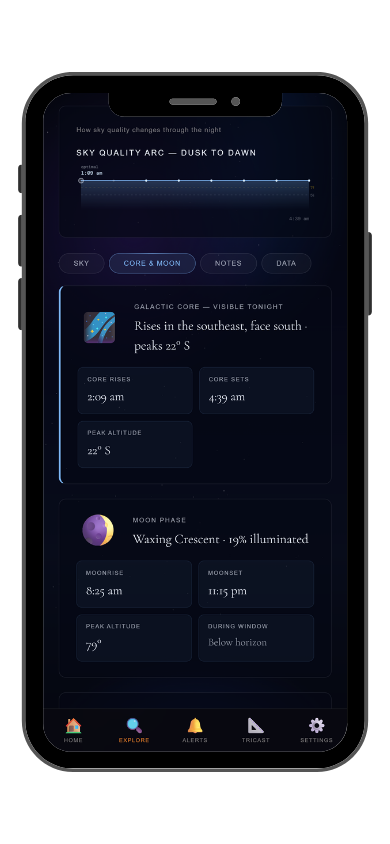
The galactic core is visible from approximately February through November, with the southerly latitude of far west Texas providing one of the longest galactic seasons in the continental US. July and August deliver the highest and brightest core. Summer monsoons can bring afternoon and evening storms, but the Davis Mountains location typically sees clearing by late evening. Fall and spring are the most consistently clear seasons. McDonald Observatory hosts regular public viewing programs and star parties that are well worth attending alongside a fort visit.