Frequently asked
Is tonight good for stargazing in Fruita?
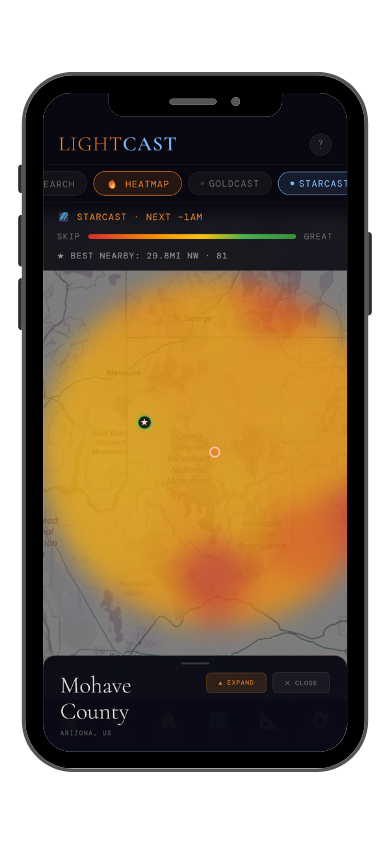
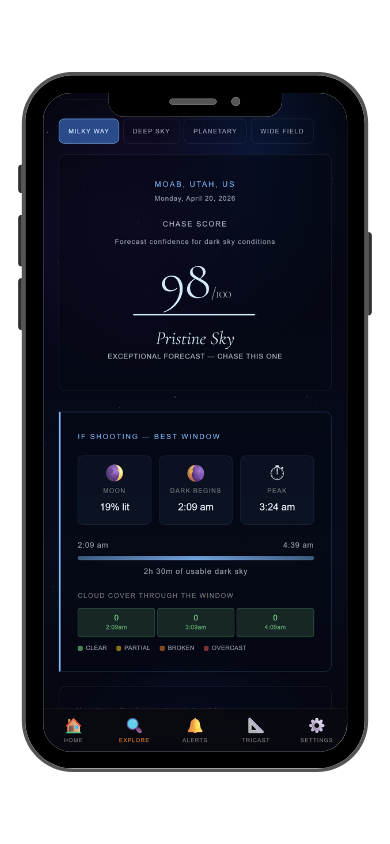
The live score above pulls today's forecast and runs it through StarCast's scoring model, factoring in cloud cover, moon illumination, Bortle class, humidity, and atmospheric transparency. Above 70 is an excellent night for astrophotography. Below 40, conditions are poor. The score updates daily.
What makes Fruita good for astrophotography?
Fruita sits at 4,500 feet on the western edge of Colorado's Grand Valley, at the foot of the Colorado National Monument — a 23,000-acre plateau of red sandstone canyons, towering monoliths, and winding mesa roads. The Colorado National Monument is one of the most accessible and underappreciated dark sky locations on the Colorado Plateau, with Bortle Class 3 to 4 skies above the canyon rim and dramatic sandstone formations as foreground. Window Rock, Coke Ovens Overlook, and the Independence Monument — a 450-foot sandstone monolith — are iconic photographic subjects under the Milky Way. The Rim Rock Drive winds 23 miles across the monument's top, providing continuous overlook access throughout the night. Grand Junction's light dome is visible to the east, but the monument's western and southern horizons are very dark.
When is the Milky Way visible near Fruita?
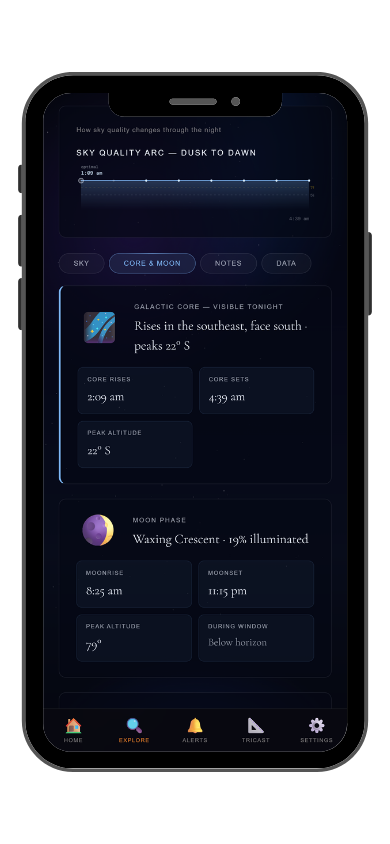
The galactic core is visible from late March through early October. Colorado National Monument is accessible year-round and offers reliable shooting conditions from April through September. Prime season is May through August, when the core rises high enough to clear the canyon walls and frame above the monument's sandstone spires. The Colorado Plateau climate means far less summer precipitation than higher Colorado mountain terrain, and nights at the monument tend to be clear and dry. The monument's Rim Rock Drive allows photographers to quickly reposition between overlooks during a single night session, making it unusually efficient for composition scouting.