Frequently asked
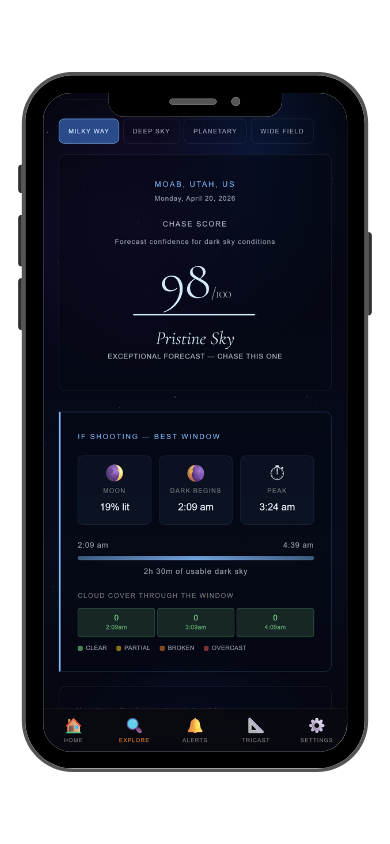
Is tonight good for stargazing at Great Smoky Mountains?
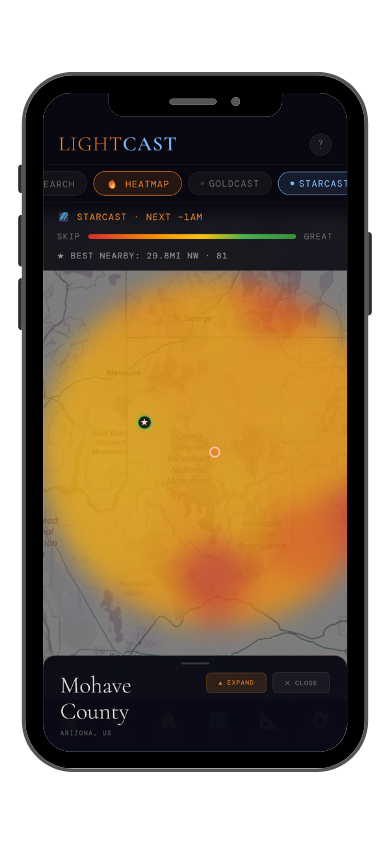
The live score above pulls today's forecast and runs it through StarCast's scoring model, which factors in cloud cover, moon illumination, Bortle class, humidity, and atmospheric transparency. Above 70 is an excellent night. Below 40, conditions are poor. The score updates daily.
What makes Great Smoky Mountains good for astrophotography?
The Smokies are the most visited national park in the US by day, but at night the high ridgelines shed the crowds and reveal surprisingly dark skies. Clingmans Dome at 6,643 feet puts you above the atmospheric haze that collects in the valleys and gives you an unobstructed southern horizon. The park's famous morning fog and low cloud formations can create dramatic foreground layers beneath a clear sky. Firefly season in late May and early June brings a unique bioluminescence photography opportunity that overlaps with early Milky Way season.
When is the Milky Way visible at Great Smoky Mountains?
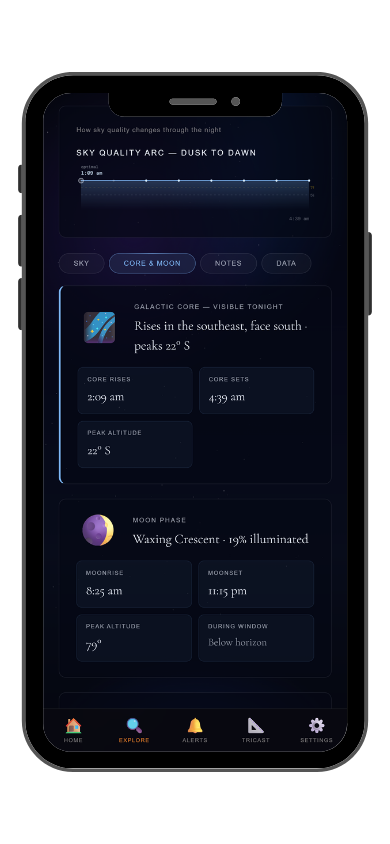
The galactic core rises over the Smokies from April through October. Humidity and summer haze are ongoing challenges: September and October often deliver the clearest skies as the air dries out after summer. Clingmans Dome Road closes at dusk in some seasons, so check access before planning a high-elevation shoot. The lower elevation meadows at Cades Cove are accessible year-round and offer wide open sky with Appalachian ridge silhouettes.