Frequently asked
Is tonight good for stargazing at Gros Morne?
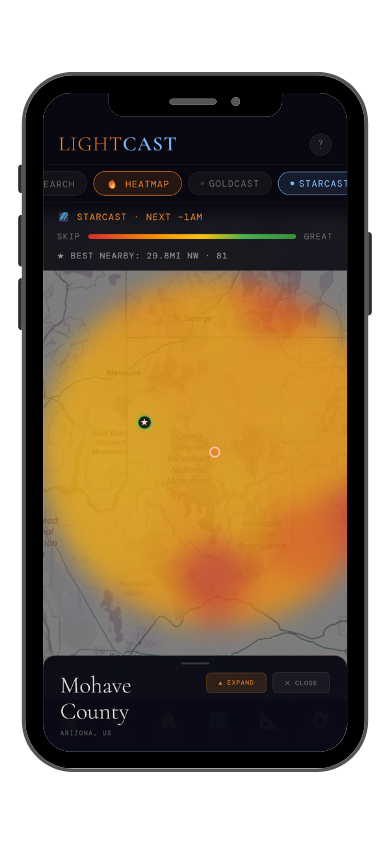
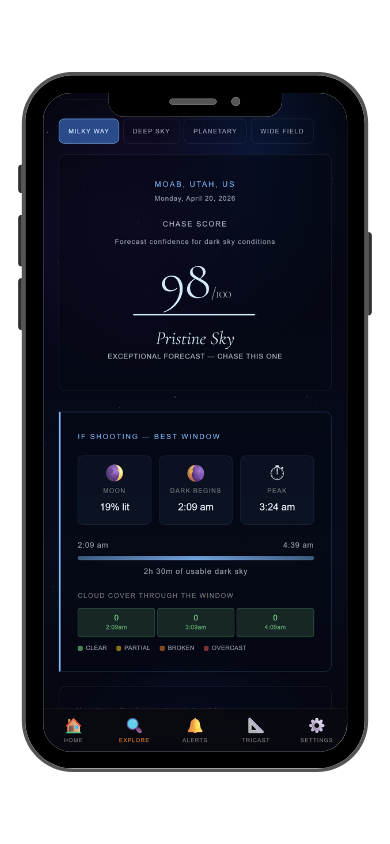
The live score above pulls today's forecast and runs it through StarCast's scoring model, factoring in cloud cover, moon illumination, Bortle class, humidity, and atmospheric transparency. Above 70 is an excellent night. Below 40, conditions are poor. The score updates daily.
What makes Gros Morne good for astrophotography?
Gros Morne National Park on Newfoundland's west coast is a UNESCO World Heritage Site protecting some of the most geologically significant terrain in the world, including the Tablelands, an exposed section of Earth's mantle that gives the landscape a rust-orange, barren appearance unlike anything else in eastern Canada. The Gulf of St. Lawrence to the west and the Long Range Mountains to the east mean minimal light pollution in both directions. Corner Brook is 70 kilometers to the south and produces a small dome. Western Brook Pond Fjord and the Tablelands are the most striking night foreground options, with the fjord walls and barren plateau lending a surreal quality to long exposures.
When is the Milky Way visible at Gros Morne?
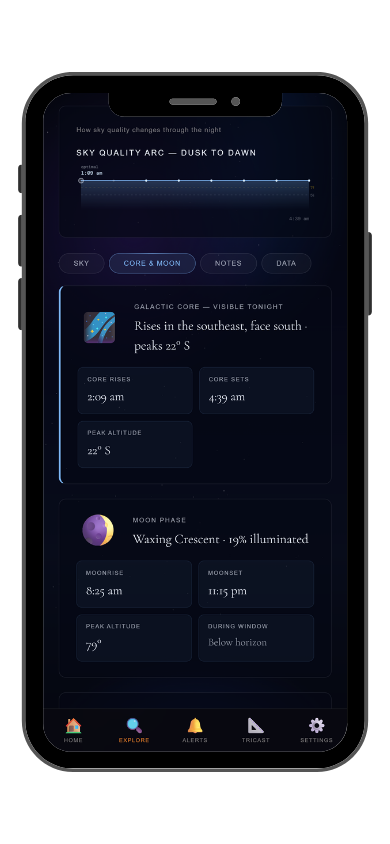
The galactic core is visible from April through October. Newfoundland's Atlantic coast weather is changeable: clear nights do occur, but cloud and fog are frequent enough that flexibility matters. July and August are the most visited months and bring the best temperature and longest daylight, but dark hours are short. September is often the best balance: nights lengthen, crowds thin, and the coastal weather can stabilize. Aurora activity is worth monitoring from August onward at this latitude.