Frequently asked
Is tonight good for stargazing at McDonald Observatory?
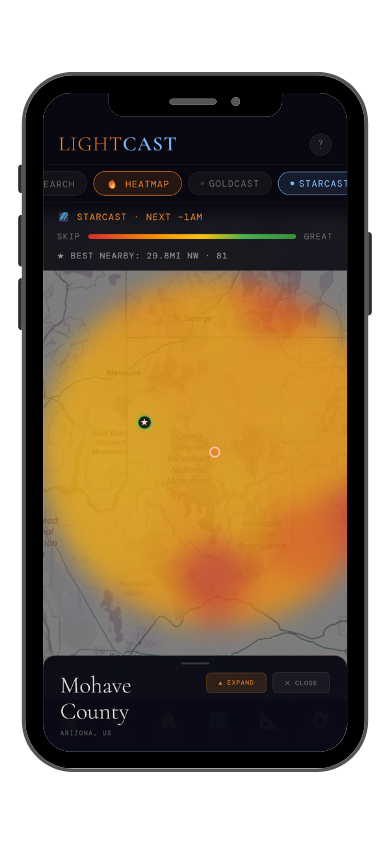
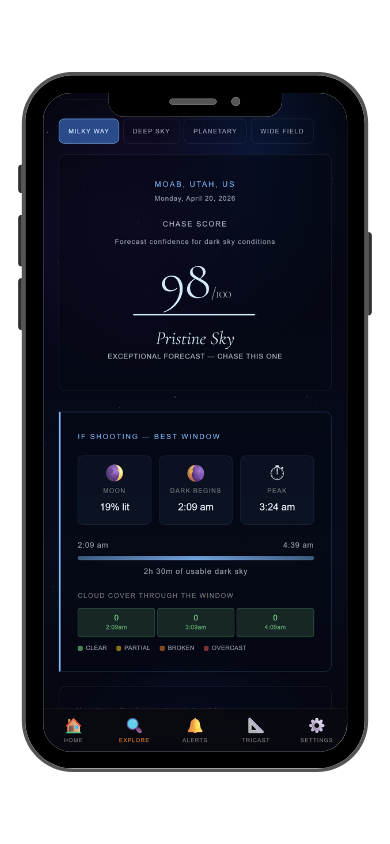
The live score above pulls today's forecast and runs it through StarCast's scoring model, factoring in cloud cover, moon illumination, Bortle class, humidity, and atmospheric transparency. Above 70 is an excellent night. Below 40, conditions are poor. The score updates daily.
What makes McDonald Observatory good for astrophotography?
McDonald Observatory sits atop Mount Locke in the Davis Mountains of West Texas at over 6,700 feet. It operates under Bortle Class 2 skies and is part of the Greater Big Bend International Dark Sky Reserve, the largest IDA-certified reserve in the world at roughly 15 million acres. Jeff Davis County has fewer than 2,000 residents and legally limits outdoor lighting across the county, creating some of the most consistently dark skies in the continental United States. The observatory hosts public Star Parties on Tuesday, Thursday, and Saturday evenings that include telescope access. The surrounding high desert provides low humidity and clear skies most of the year.
When is the Milky Way visible at McDonald Observatory?
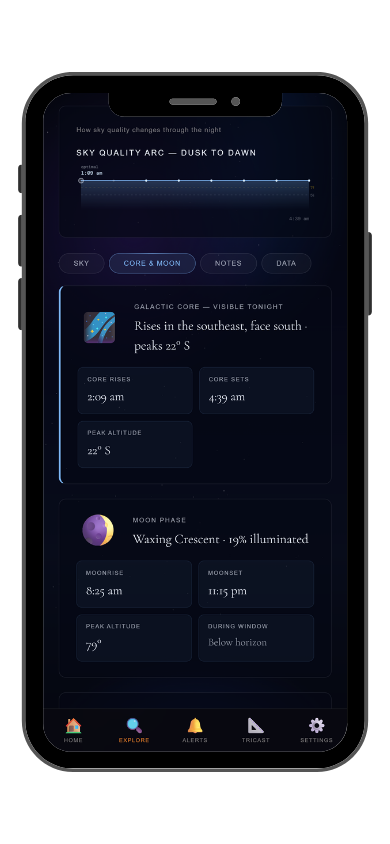
The galactic core is visible from March through October. The Davis Mountains' elevation and dry climate mean exceptional atmospheric transparency on most clear nights. Summer evenings bring the galactic center nearly overhead, and the flat desert horizon gives unobstructed views in all directions. The Texas monsoon season from July through early September can bring afternoon thunderstorms, but nights often clear completely.