Frequently asked
Is tonight good for stargazing at Jarbidge Wilderness?
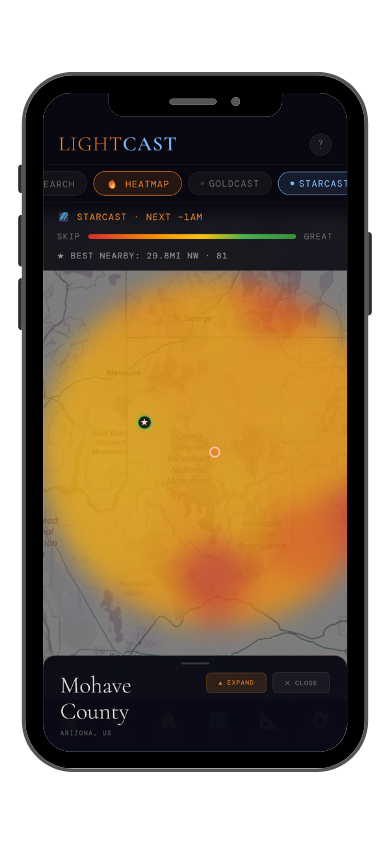
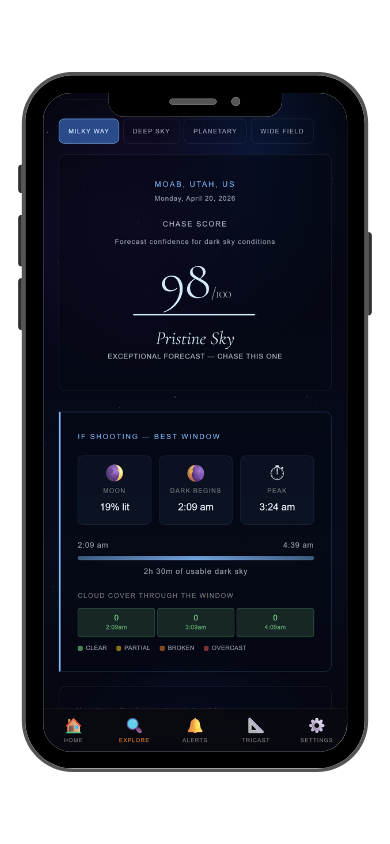
The live score above pulls today's forecast and runs it through StarCast's scoring model, factoring in cloud cover, moon illumination, Bortle class, humidity, and atmospheric transparency. Above 70 is an excellent night. Below 40, conditions are poor. The score updates daily.
What makes Jarbidge Wilderness good for astrophotography?
Jarbidge is one of the most remote wilderness areas in the lower 48 states, located in the far northeastern corner of Nevada near the Idaho border. The region sits under Bortle Class 1 skies, with no significant population centers within hours of the area. The town of Jarbidge has fewer than 100 year-round residents. Elevations in the wilderness range from around 5,500 to over 10,000 feet, with peaks topping out near 10,839 feet at Matterhorn Peak. The combination of extreme isolation, high elevation, and desert-adjacent climate creates atmospheric transparency that rivals the best sites in the American West. The access road is unpaved and the area is genuinely remote, which keeps light-emitting traffic to a minimum.
When is the Milky Way visible at Jarbidge?
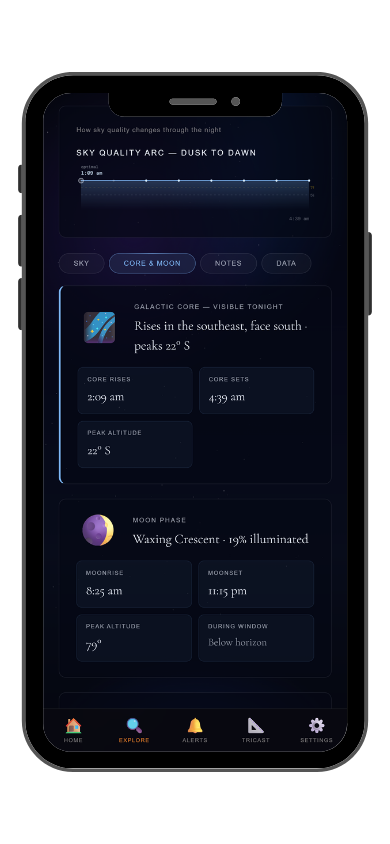
The galactic core is visible from April through October, with the access road typically passable from June through early November depending on snowpack. Summer nights are short at this latitude, so the darkest window falls between about 11 PM and 3 AM. The area's high elevation and dry climate mean excellent transparency on any clear night. Planning around the new moon dramatically improves the experience given how dark the base sky already is.