Frequently asked
Is tonight good for stargazing at John Day Fossil Beds?
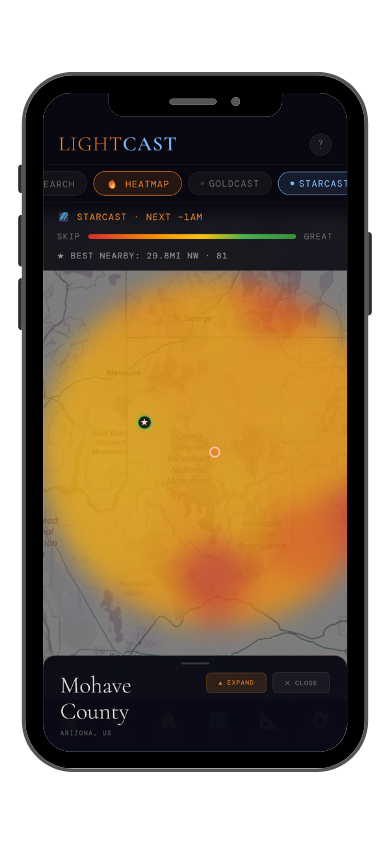
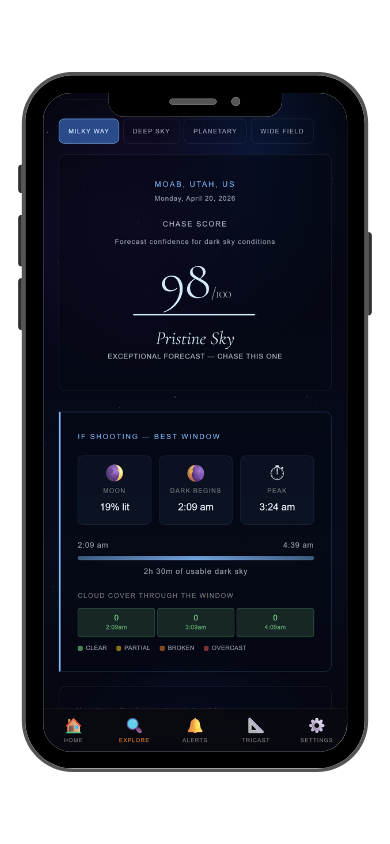
The live score above pulls today's forecast and runs it through StarCast's scoring model, factoring in cloud cover, moon illumination, Bortle class, humidity, and atmospheric transparency. Above 70 is an excellent night for astrophotography. Below 40, conditions are poor. The score updates daily.
What makes John Day Fossil Beds good for astrophotography?
John Day Fossil Beds National Monument sits in Oregon's high desert interior, split across three units, Sheep Rock, Painted Hills, and Clarno, all well away from any significant city. The Painted Hills unit in particular, with its striped bands of red, gold, and black claystone, gives photographers one of the more visually distinctive foregrounds anywhere in the Pacific Northwest. Being east of the Cascades and largely surrounded by ranchland and national forest, the monument holds Bortle Class 2 to 3 skies across most of its territory.
When is the Milky Way visible at John Day Fossil Beds?
The core is visible from March through October. Summer brings the driest and most reliably clear conditions in this rain-shadow region east of the Cascade Mountains, and June through August is typically the most consistent window. Spring can still produce good clear nights but comes with a higher chance of Pacific frontal systems pushing through.