Frequently asked
Is tonight good for stargazing at Jotunheimen National Park?
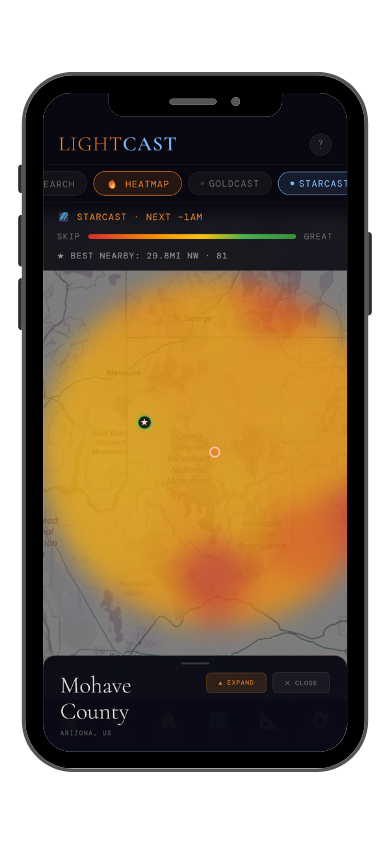
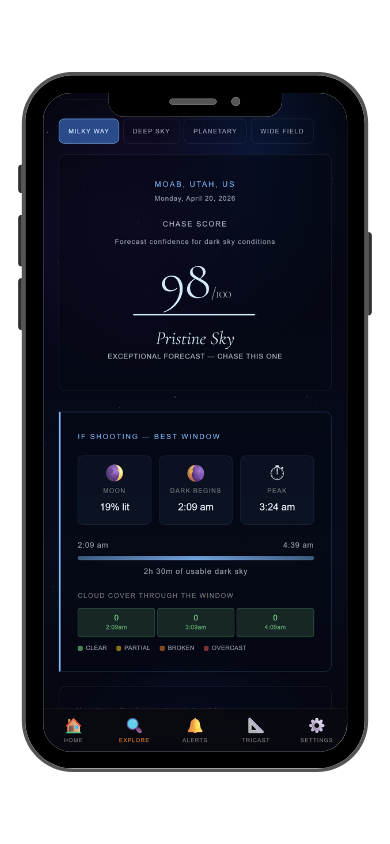
The live score above pulls today's forecast and runs it through StarCast's scoring model, factoring in cloud cover, moon illumination, Bortle class, humidity, and atmospheric transparency. Above 70 is an excellent night. Below 40, conditions are poor. The score updates daily.
What makes Jotunheimen National Park good for astrophotography?
Jotunheimen — the "Home of the Giants" — is Norway's most iconic national park, protecting the highest mountain massif in Scandinavia with 29 peaks over 2,300 meters including Galdhøpiggen, the highest point in northern Europe. Located in the heart of the Norwegian mountain plateau, well removed from Oslo and Bergen, the park achieves Bortle Class 2 to 3 skies over a dramatic landscape of glaciers, deep glacial lakes, and sheer rock faces. Besseggen Ridge, one of Norway's most famous hikes, and the Jotunheimen mountain hut (hytte) network allow extended stays in high, dark terrain. The northern latitude makes aurora photography a compelling parallel pursuit from late August through spring, with the jagged Jotunheimen peaks providing excellent silhouette frames for northern lights displays.
When is the Milky Way visible at Jotunheimen National Park?
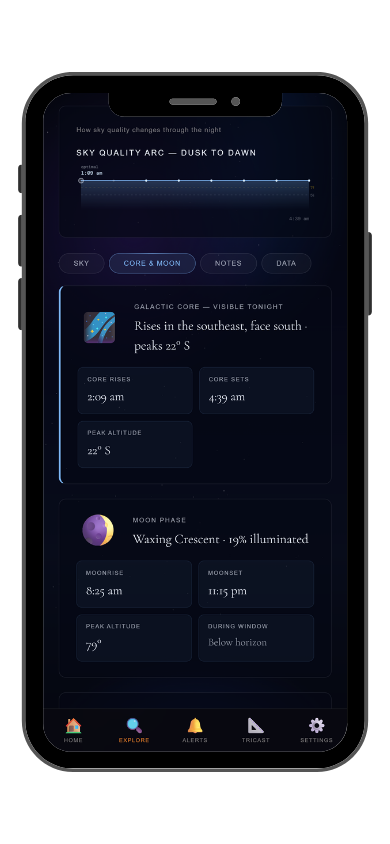
The galactic core is visible from approximately April through September, severely constrained by the very short nights at this Norwegian latitude in summer — true astronomical darkness is essentially absent from late May through mid-July. September offers the best window, combining returning darkness, galactic visibility, and the onset of aurora season before autumn snow closes the higher trails. The mountain hut network stays open through late September, making overnight stays at altitude practical. Aurora season runs from late August through April, with the park's high, open terrain providing outstanding frames for northern lights above glaciated peaks.