Frequently asked
Is tonight good for stargazing at Kartchner Caverns?
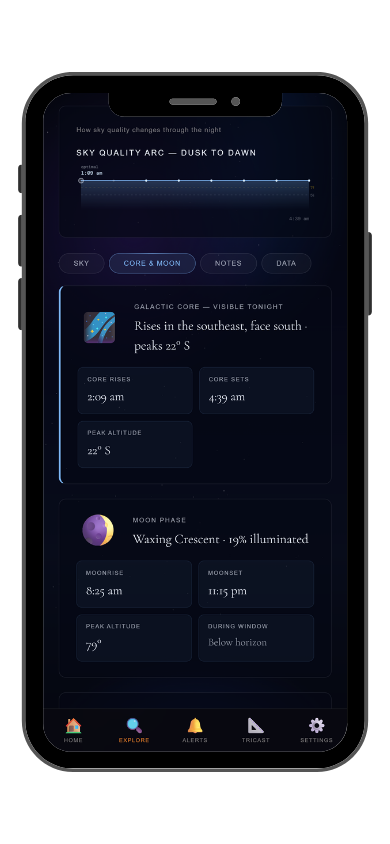
The live score above pulls today's forecast and runs it through StarCast's scoring model, factoring in cloud cover, moon illumination, Bortle class, humidity, and atmospheric transparency. Above 70 is an excellent night. Below 40, conditions are poor. The score updates daily.
What makes Kartchner Caverns good for astrophotography?
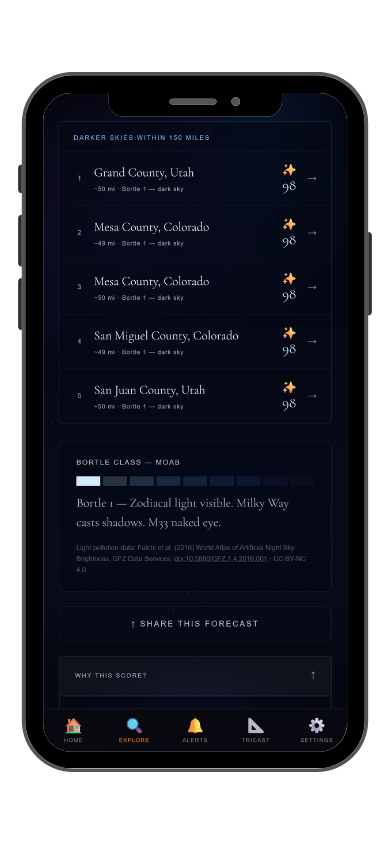
Kartchner Caverns State Park in the Whetstone Mountains southeast of Tucson offers a rare combination: a world-class limestone cave system by day and dark desert skies by night. The park's campground uses dark-sky-compliant lighting and the surrounding Sonoran Desert landscape is exceptionally dark, benefiting from Tucson's internationally recognized outdoor lighting ordinances. The park is part of the Tucson Astro Trail, a self-guided tour connecting 11 dark sky locations and observatories around the region. The cave entrance and saguaro cacti on the surrounding desert slopes create foreground options unique in southeastern Arizona. At about an hour from Tucson and 45 minutes from Sierra Vista, this is one of the most accessible genuinely dark sky sites in the region.
When is the Milky Way visible at Kartchner Caverns?
The galactic core is visible from March through October. Arizona's 300-plus clear nights per year make conditions reliable across most of the season. The summer monsoon from July through early September brings afternoon storms that often clear by evening. The cave tours run year-round, making a combined daytime cave visit and evening stargazing session a practical single-day itinerary for visitors to southeastern Arizona.