Frequently asked
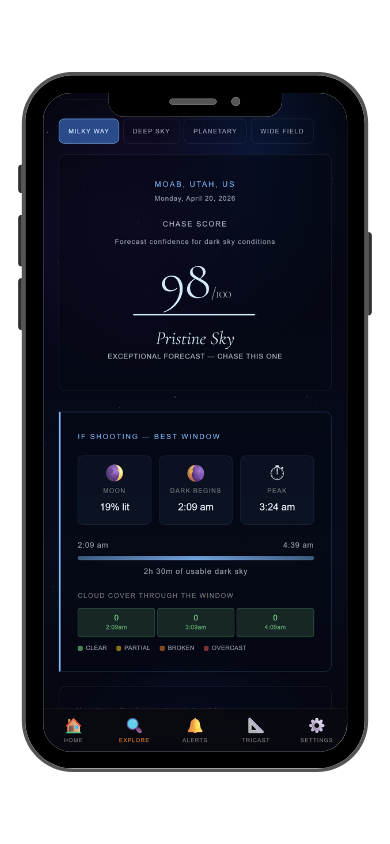
Is tonight good for stargazing at Katmai?
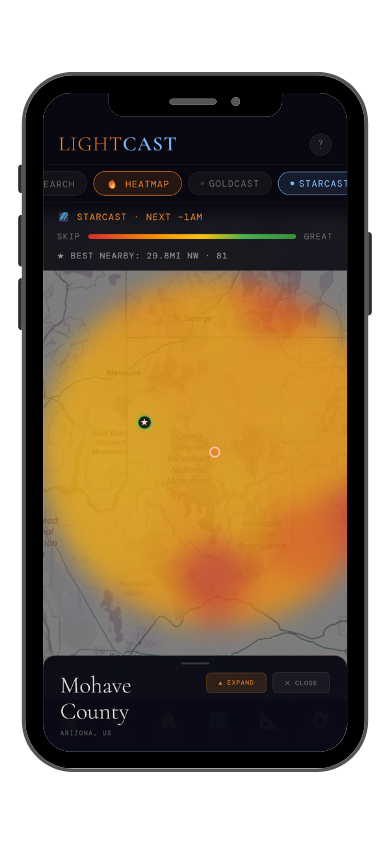
The live score above pulls today's forecast and runs it through StarCast's scoring model, factoring in cloud cover, moon illumination, Bortle class, humidity, and atmospheric transparency. Above 70 is an excellent night. Below 40, conditions are poor. The score updates daily.
What makes Katmai good for astrophotography?
Katmai National Park covers more than four million acres on the Alaska Peninsula, accessible only by small aircraft or boat from King Salmon or Homer. The park's extreme remoteness from any significant population center means Bortle Class 1 conditions across its entire range. The active volcanic landscape, with the Valley of Ten Thousand Smokes and multiple peaks in the Aleutian Range, provides dramatic geological foregrounds. Naknek Lake, the largest lake in the park, offers expansive water reflections. The total absence of roads connecting the park to the highway system means light pollution from vehicles and development simply does not exist here. This is one of the most genuinely untouched dark sky environments accessible to visitors anywhere in North America.
When is the Milky Way visible at Katmai?
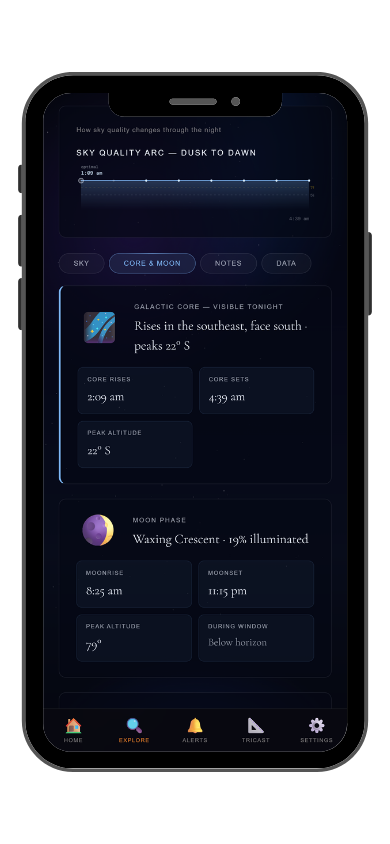
The galactic core is visible from approximately late August through October, the window when true astronomical darkness returns after Alaska's extended summer twilight. Aurora season begins in late August and runs through spring, with the subarctic latitude offering frequent aurora opportunities. The park is most visited in July and early August for brown bear viewing at Brooks Falls, but that window coincides with the midnight sun and limited astrophotography conditions. Late August through October offers the best overlap of accessible weather, returning darkness, and aurora potential before winter access becomes extremely challenging.