Frequently asked
Is tonight good for stargazing at Lake Clark National Park?
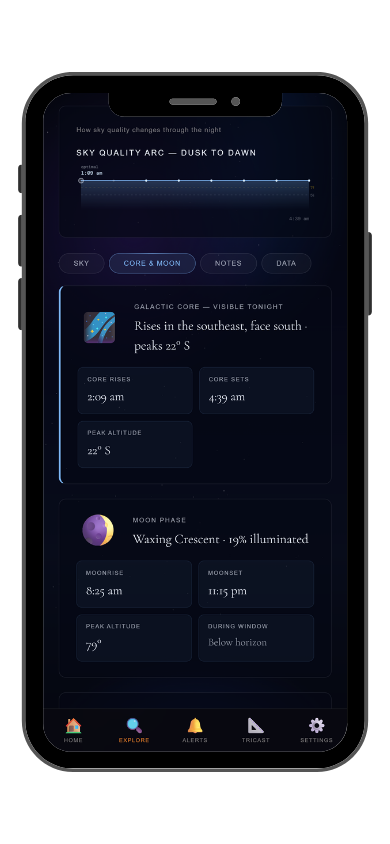
The live score above pulls today's forecast and runs it through StarCast's scoring model, factoring in cloud cover, moon illumination, Bortle class, humidity, and atmospheric transparency. Above 70 is an excellent night. Below 40, conditions are poor. The score updates daily.
What makes Lake Clark National Park good for astrophotography?
Lake Clark National Park across Cook Inlet from Anchorage is one of the least-visited national parks in the United States, with no roads connecting it to the highway system and access only by small aircraft or boat. Its 4 million acres span three distinct ecosystems — Pacific Coast, the Alaska Range, and boreal interior — with Bortle Class 1 skies throughout. The park's turquoise glacial lakes, active volcanoes including Mount Redoubt, and coastal wilderness provide exceptional foreground. Its position at 60 degrees north puts it squarely in the aurora zone, and the combination of volcanic peaks, remote lake shores, and consistently dark skies makes it a dream destination for wilderness astrophotographers.
When is the Milky Way visible at Lake Clark National Park?
The galactic core is visible from approximately late August through October as darkness returns to southcentral Alaska. Coastal weather influences from the Pacific bring variable cloud cover, requiring flexibility in planning. Aurora season runs from late August through April. Access requires small aircraft charter from Anchorage, Port Alsworth, or Homer, and all wilderness travel requires full self-sufficiency. The fall window — when darkness, aurora activity, and fall foliage converge — is the most compelling season for night photography.