Frequently asked
Is tonight good for stargazing at Lassen Volcanic?
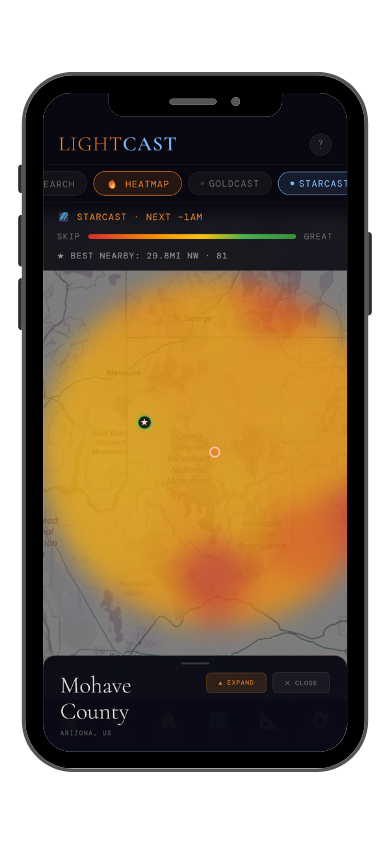
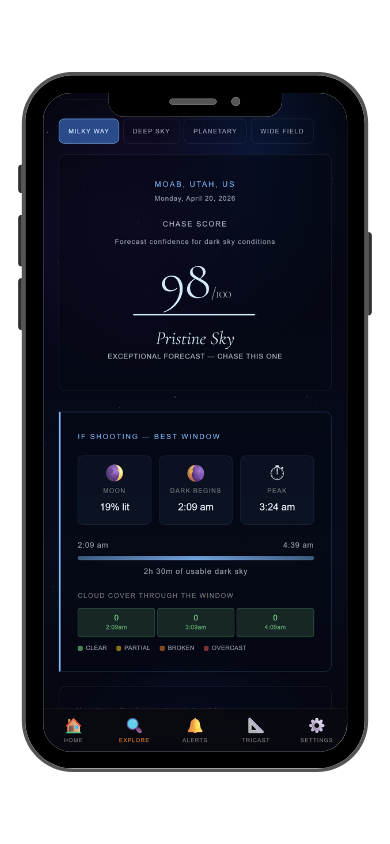
The live score above pulls today's forecast and runs it through StarCast's scoring model, which factors in cloud cover, moon illumination, Bortle class, humidity, and atmospheric transparency. Above 70 is an excellent night. Below 40, conditions are poor. The score updates daily.
What makes Lassen Volcanic good for astrophotography?
Lassen is Northern California's most underrated dark sky park. The volcanic landscape, hydrothermal features, and high alpine lakes give astrophotographers foreground options you won't find at most national parks. Manzanita Lake reflects the Milky Way clearly on calm nights, and the steam vents and fumaroles create moody atmospheric effects around the edges of a long exposure. The park sits well east of coastal fog and well above valley haze, with clear nights that rival the Colorado Plateau in summer. Elevation ranges from 5,000 to over 10,000 feet.
When is the Milky Way visible at Lassen Volcanic?
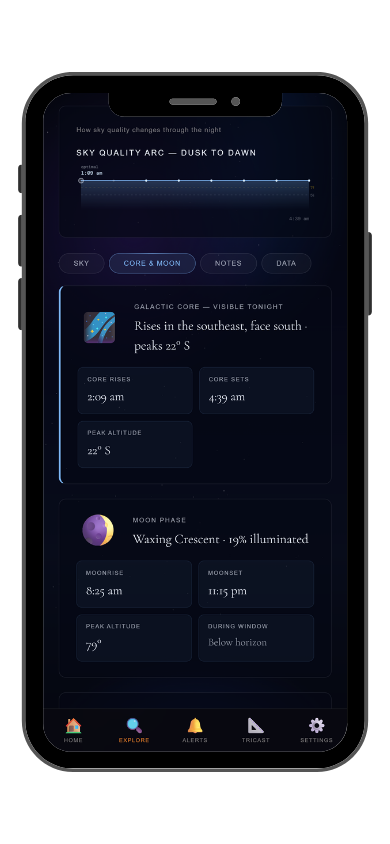
The galactic core is visible from April through October. The park is snowbound at higher elevations through May most years, so June through September is the practical shooting window. July and August deliver the most reliable clear skies. The highway through the park closes in winter, but Manzanita Lake near the northwest entrance stays accessible for lower-elevation winter star trail sessions on clear nights.