Frequently asked
Is tonight good for stargazing at Lava Beds?
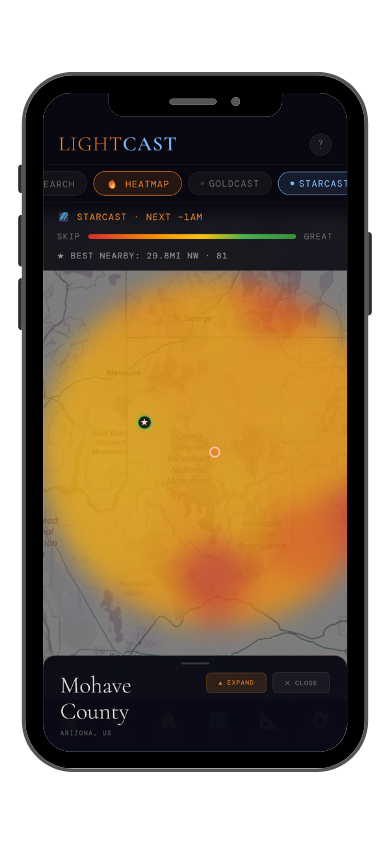
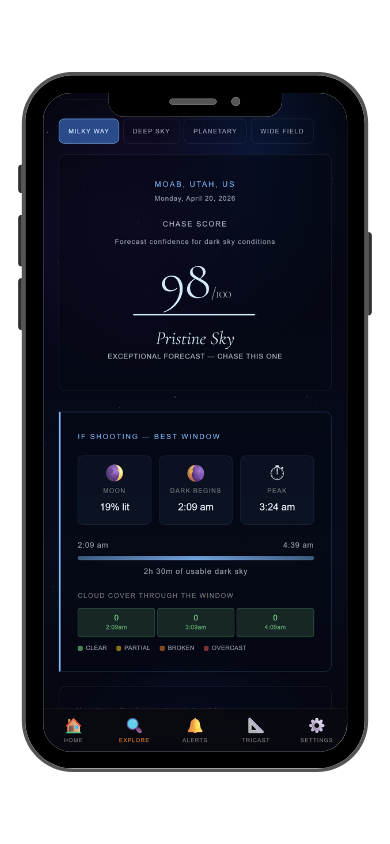
The live score above pulls today's forecast and runs it through StarCast's scoring model, factoring in cloud cover, moon illumination, Bortle class, humidity, and atmospheric transparency. Above 70 is an excellent night. Below 40, conditions are poor. The score updates daily.
What makes Lava Beds good for astrophotography?
Lava Beds National Monument in far northern California sits at approximately 4,000 to 5,700 feet on the Medicine Lake Highlands, a remote volcanic plateau near the Oregon border. The monument is designated an International Dark Sky Park and holds Bortle Class 2 conditions. The surrounding volcanic landscape, one of the most geologically active regions in the continental US, features over 700 lava tube caves, cinder cones, lava flows, and spatter cones that create dramatic and otherworldly foreground options for astrophotography. Schonchin Butte, a cinder cone with a fire lookout at 5,253 feet, provides an elevated 360-degree shooting position. The monument is one of the least-visited national monuments in California, keeping it uncrowded even during peak summer.
When is the Milky Way visible at Lava Beds?
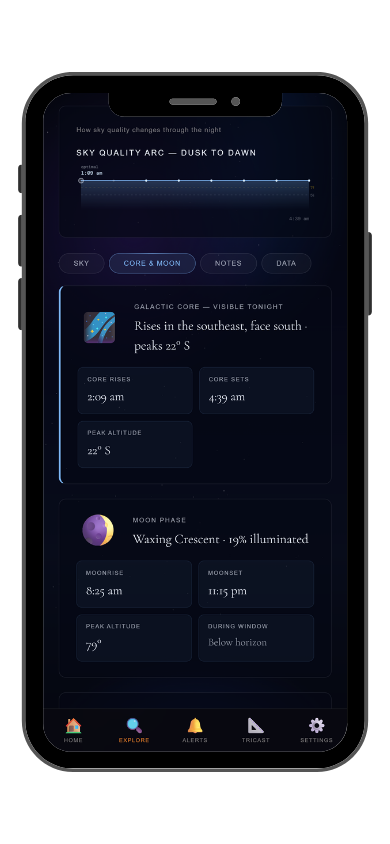
The galactic core is visible from March through October. Northern California's interior high desert climate delivers low humidity and consistent clear skies across most of the season. The monument is accessible year-round, though winter snow can close some interior roads. Summer is the most popular window for combining cave exploration by day with astrophotography at night. The nearest significant services are in Tulelake, about 25 miles away, and Klamath Falls, Oregon, about 50 miles north.