Frequently asked
Is tonight good for stargazing at Little Bighorn Battlefield?
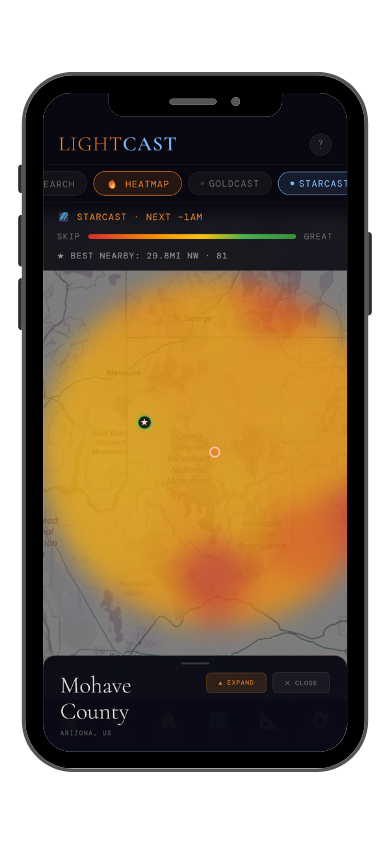
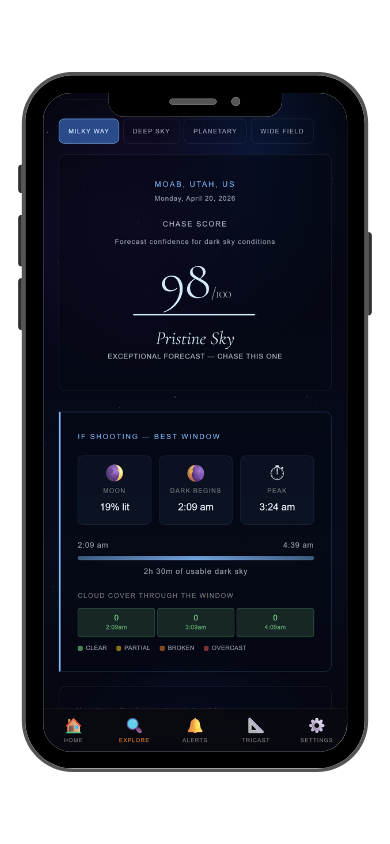
The live score above pulls today's forecast and runs it through StarCast's scoring model, factoring in cloud cover, moon illumination, Bortle class, humidity, and atmospheric transparency. Above 70 is an excellent night. Below 40, conditions are poor. The score updates daily.
What makes Little Bighorn Battlefield good for astrophotography?
Little Bighorn Battlefield National Monument in southeastern Montana preserves the site of the 1876 battle between US Army forces and Lakota, Northern Cheyenne, and Arapaho warriors. Set on the open rolling hills and grasslands of the Crow Indian Reservation, the battlefield sits in one of the most remote and sparsely populated regions of the northern Great Plains. Bortle Class 2 to 3 skies are typical here, with a flat and completely dark horizon in every direction. The white marble grave markers on the hillside battlefield, the Indian Memorial, and the sweep of high plains grassland under an immense star field create a historically resonant and visually powerful night photography environment. The combination of sacred landscape and extraordinary darkness makes Little Bighorn a deeply evocative destination for night photography.
When is the Milky Way visible at Little Bighorn Battlefield?
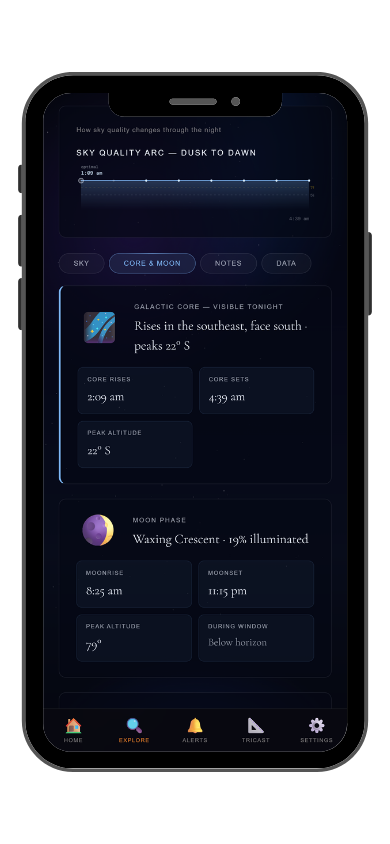
The galactic core is visible from April through October, peaking in July and August when it arcs high over the southern horizon above the open plains. The northern Great Plains deliver a high frequency of clear nights, particularly in late summer and fall. Thunderstorms are possible in summer but typically move through the region quickly. The battlefield itself closes at dark, but the surrounding public lands and Crow Agency area offer access to the same sky conditions from nearby vantage points.