Frequently asked
Is tonight good for stargazing at Lofoten?
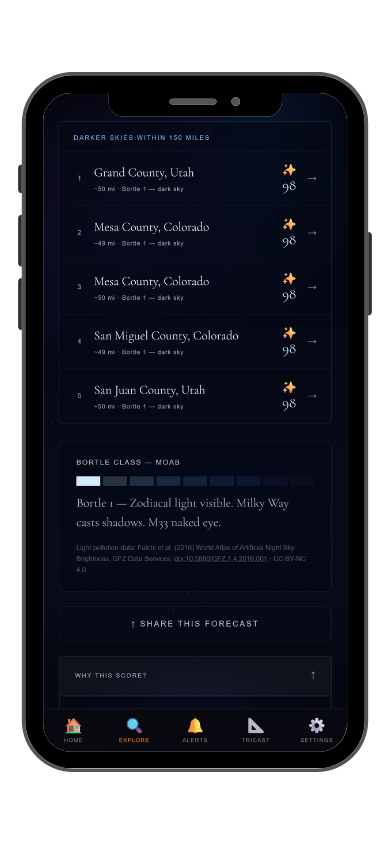
The live score above pulls today's forecast and runs it through StarCast's scoring model, factoring in cloud cover, moon illumination, Bortle class, humidity, and atmospheric transparency. Above 70 is an excellent night. Below 40, conditions are poor. The score updates daily.
What makes Lofoten good for astrophotography?
The Lofoten Islands rise dramatically from the Norwegian Sea above the Arctic Circle at 68 degrees north, with jagged peaks dropping straight into the water and traditional red fishing villages (rorbuer) perched on the rocks. The combination of mountain, fjord, sea, and northern sky is among the most photographed landscapes in the world for aurora photography. Light pollution is essentially zero across the archipelago outside of Svolvær. The islands' maritime climate means weather changes fast, but when the sky clears, the aurora can be extraordinary: the islands sit well inside the auroral oval and frequently see major displays that light up the fjords and village reflections.
When is the Milky Way visible at Lofoten?
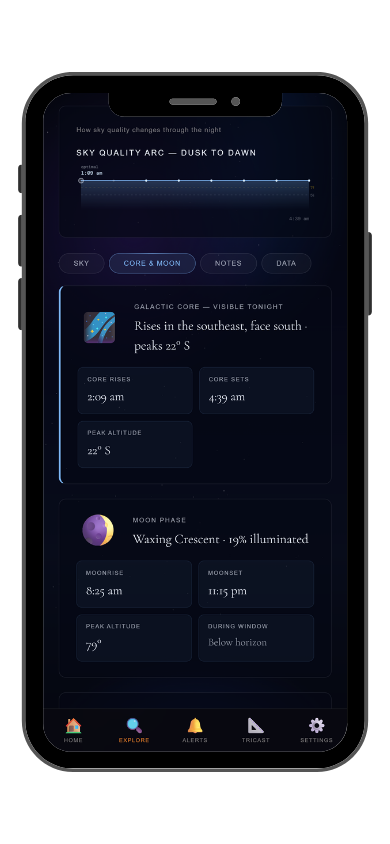
The Milky Way is not visible from Lofoten during summer due to the midnight sun: astronomical darkness returns in late August. The core is low on the southern horizon from September through early October and is not the primary draw. Aurora season runs from late August through April, with the darkest and most active months falling in October through March. The peak combination of long polar nights and high aurora activity falls in January and February. Reine and Nusfjord are the most popular base locations for night photography, with the fjord reflections and mountain backdrops giving memorable aurora compositions.