Frequently asked
Is tonight good for stargazing at Mammoth Cave National Park?
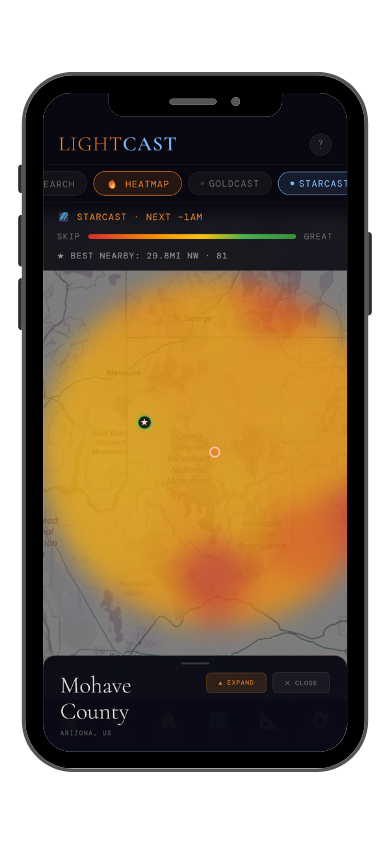
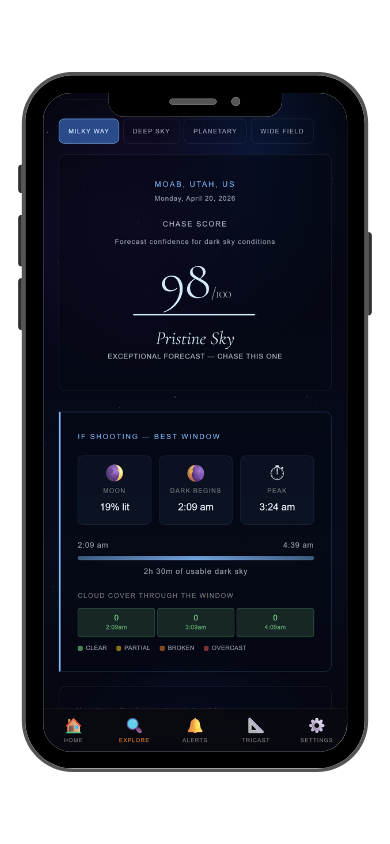
The live score above pulls today's forecast and runs it through StarCast's scoring model, factoring in cloud cover, moon illumination, Bortle class, humidity, and atmospheric transparency. Above 70 is an excellent night. Below 40, conditions are poor. The score updates daily.
What makes Mammoth Cave National Park good for astrophotography?
Mammoth Cave National Park is one of the few International Dark Sky Parks in the eastern United States, protecting a large buffer of forested land in south-central Kentucky from light pollution. Its Bortle Class 4 to 5 skies are among the darkest accessible in the region between Nashville and Louisville. The park's cave entrances, forest roads, and open ridge tops provide varied shooting locations, and the historic structures near the cave entrance add architectural foreground options. The surrounding Pennyroyal Plateau landscape of karst sinkholes and hardwood forest frames night skies in a distinctly Appalachian way.
When is the Milky Way visible at Mammoth Cave National Park?
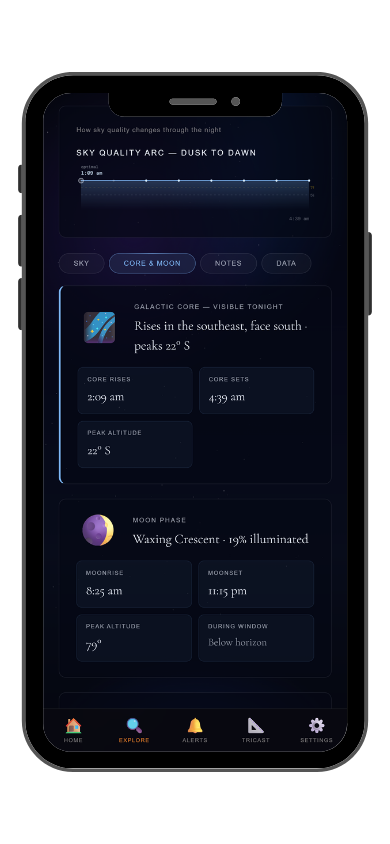
The galactic core is visible from April through October, with July and August offering the highest arc in the southern sky. Kentucky's humid continental climate brings variable cloud cover throughout the year, so checking the forecast before heading out is important. Clear nights are more common in fall, which also brings lower humidity and better atmospheric transparency. The park hosts regular astronomy programs and star parties that are worth checking before a visit.