Frequently asked
Is tonight good for stargazing at Mojave Preserve?
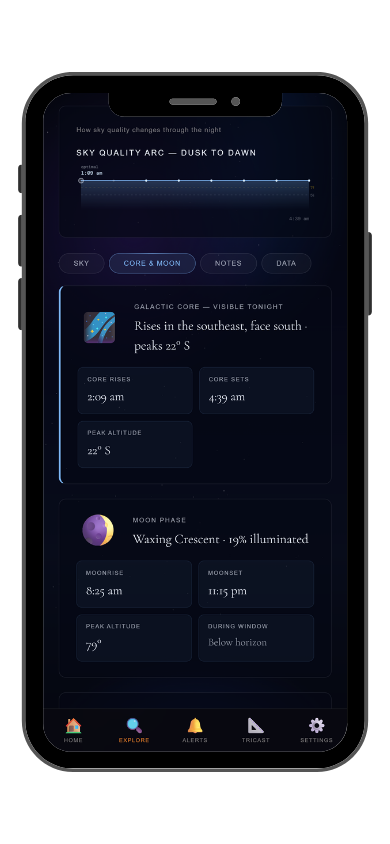
The live score above pulls today's forecast and runs it through StarCast's scoring model, factoring in cloud cover, moon illumination, Bortle class, humidity, and atmospheric transparency. Above 70 is an excellent night. Below 40, conditions are poor. The score updates daily.
What makes Mojave Preserve good for astrophotography?
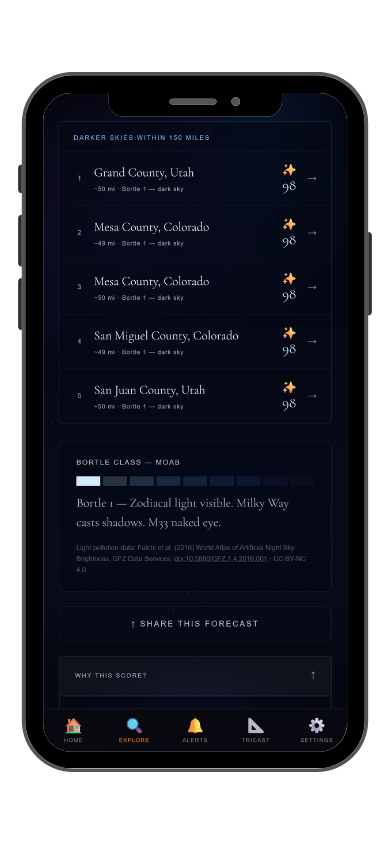
Mojave National Preserve covers 1.6 million acres between Los Angeles and Las Vegas, sitting in the gap between the two largest light domes in the American West. The interior of the preserve, particularly around Kelso Dunes and the Cinder Cones, is genuinely dark: Bortle Class 2 to 3 conditions are common well away from the I-15 and I-40 corridors. Kelso Dunes rise 700 feet from the desert floor and are one of the largest dune fields in the Mojave, creating a dramatic foreground with no facilities or crowds. The preserve is accessible year-round and sees fewer visitors than Joshua Tree despite being larger.
When is the Milky Way visible at Mojave Preserve?
The galactic core is visible from March through October. Spring and fall are ideal: desert temperatures are comfortable overnight, skies are dry, and there's no summer heat or winter cold to contend with. June through August can be very hot (100°F+), making pre-dawn sessions the most comfortable option in summer. The Kelso Dunes area is the primary target for night photographers: the dunes face south and the core rises directly above them from late spring onward.