StarCast · Mount Rainier National Park, WA

Night Sky Tonight at Mount Rainier

Reading tonight's sky conditions…
Moon
Dark window
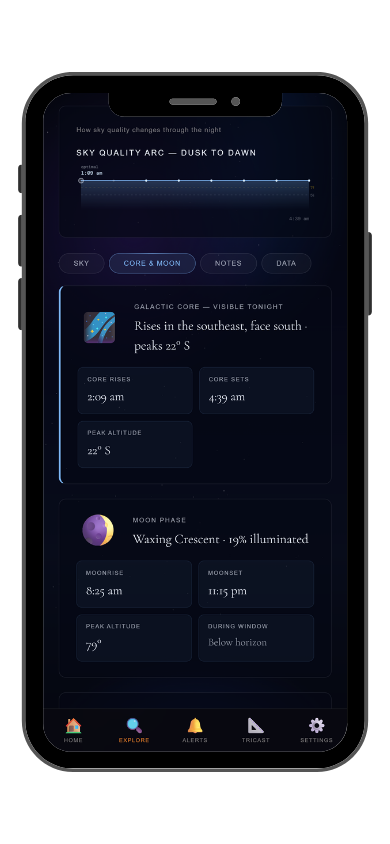
Galactic core
Conditions
Bortle class

StarCast night sky forecast — LightCast Suite
LightCast
iOS App LightCast Suite
🌌 StarCast — night sky & Milky Way visibility
🌅 GoldCast — golden hour score & cloud forecast
🚁 DroneCast — wind & flight readiness
🌫️ FogCast — fog & mist forecasting
☁️ CloudCast — cloud cover & dramatic sky timing
Price $2.99 / mo
Free Trial 7 days
Outlook 7-day

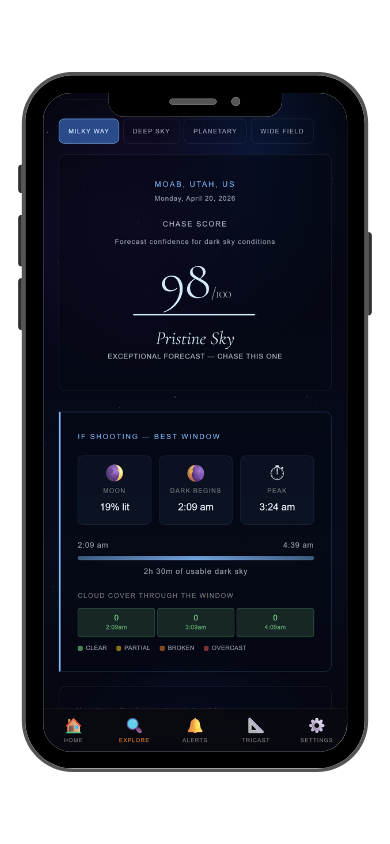
What's in the score
Cloud cover
Moon illumination
Bortle class
Transparency
Humidity

What the app shows you
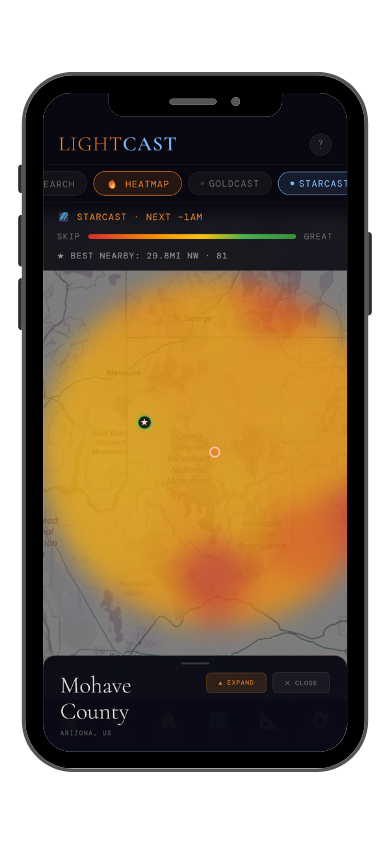
StarCast galactic core forecast
Nearby dark sky locations

Live scores for the night sky, Milky Way Core windows, darker skies nearby, & more
Check this week's forecast


Frequently asked
Is tonight good for stargazing at Mount Rainier National Park?
The live score above pulls today's forecast and runs it through StarCast's scoring model, factoring in cloud cover, moon illumination, Bortle class, humidity, and atmospheric transparency. Above 70 is an excellent night. Below 40, conditions are poor. The score updates daily.
What makes Mount Rainier National Park good for astrophotography?
Most of Mount Rainier reads Bortle Class 2 to 3, with Seattle and Tacoma's glow barely reaching the park. The Cascades' summer high-pressure pattern brings stretches of clear, dry nights that are ideal for stargazing. Reflection Lake near Paradise is a favorite spot, where calm water mirrors both the mountain and the stars, and rangers run a Night Skies Program at the Paradise Visitor Center during winter months.
When is the Milky Way visible at Mount Rainier National Park?
Core season runs April through October, with June through September the most reliable window thanks to the Cascades' drier summer pattern. The mountain creates its own localized weather, so conditions can vary even when nearby areas are clear, making a check of the forecast worthwhile before heading up.