Frequently asked
Is tonight good for stargazing at Ngorongoro Conservation Area?
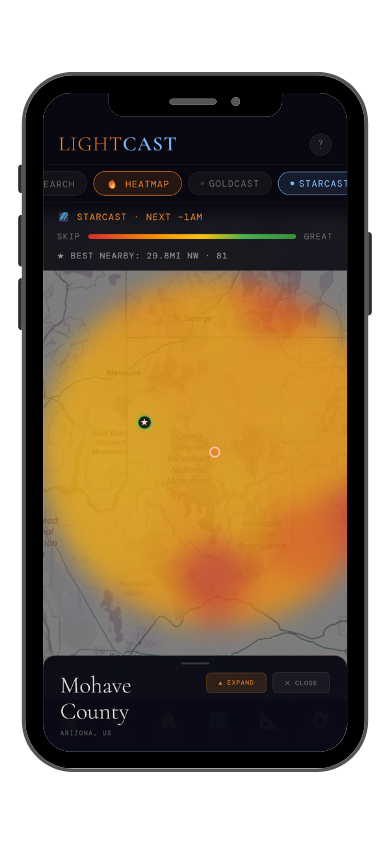
The live score above pulls today's forecast and runs it through StarCast's scoring model, factoring in cloud cover, moon illumination, Bortle class, humidity, and atmospheric transparency. Above 70 is an excellent night. Below 40, conditions are poor. The score updates daily.
What makes Ngorongoro Conservation Area good for astrophotography?
The Ngorongoro Conservation Area in northern Tanzania encompasses the Ngorongoro Crater — the world's largest intact volcanic caldera — along with the surrounding Crater Highlands, the ancient hominid fossil site at Olduvai Gorge, and the expansive Ndutu plains. The crater rim sits at 7,500 feet elevation, above much of the equatorial humidity, and the surrounding wilderness has no significant light pollution in any direction, producing Bortle Class 1 to 2 skies. The view from the crater rim at night — looking down into a caldera filled with wildlife in complete darkness under the Milky Way — is one of the most extraordinary perspectives available to a night photographer anywhere on Earth. The elevated crater rim position improves atmospheric quality relative to the lower plains below.
When is the Milky Way visible at Ngorongoro Conservation Area?
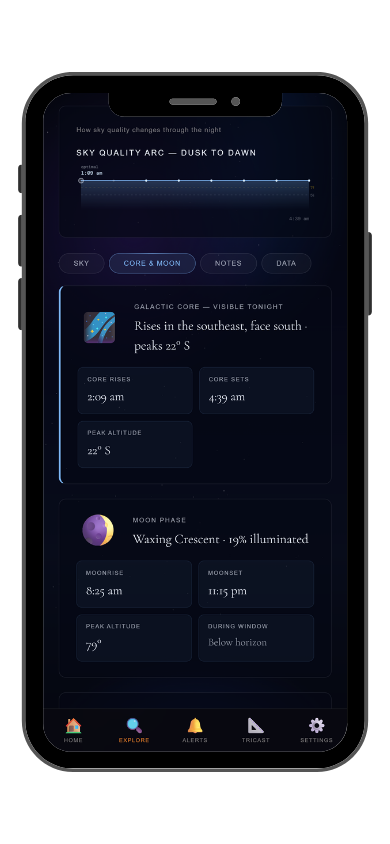
At this near-equatorial latitude, the galactic core is visible year-round and rises to nearly overhead positions. The dry season from June through October delivers the most reliable clear nights and is also prime time for crater wildlife viewing. The short rains in November and December and the long rains from March through May bring cloud cover that limits astronomy. January and February offer a dry inter-rains window that aligns with excellent Milky Way positioning. The higher elevation of the crater rim means temperatures drop significantly after dark even in the tropics — warm layers are essential for nighttime sessions on the rim.