Frequently asked
Is tonight good for stargazing in Oakhurst?
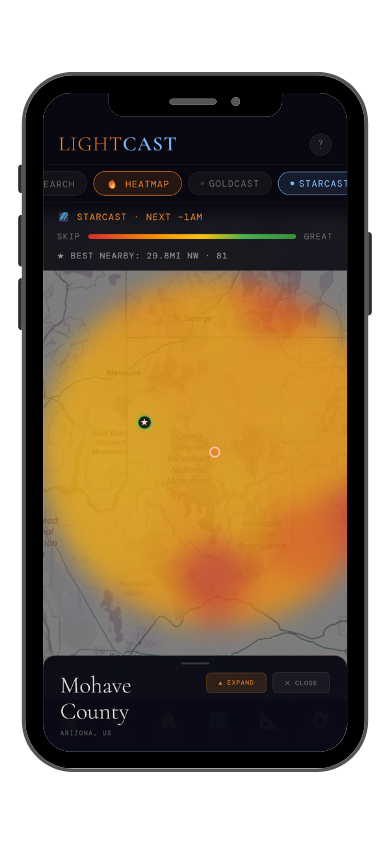
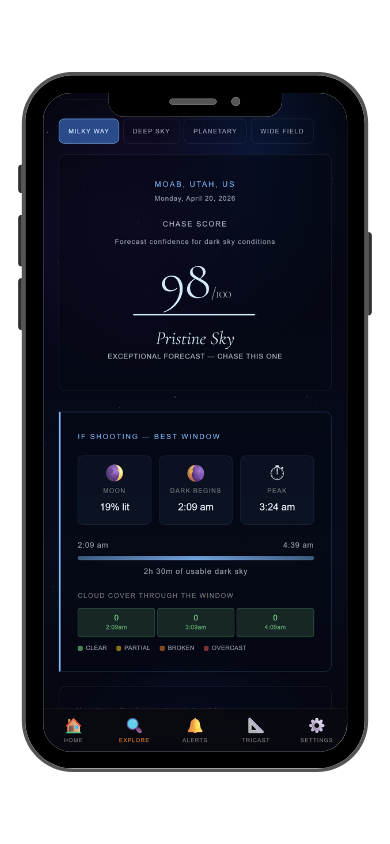
The live score above pulls today's forecast and runs it through StarCast's scoring model, factoring in cloud cover, moon illumination, Bortle class, humidity, and atmospheric transparency. Above 70 is an excellent night for astrophotography. Below 40, conditions are poor. The score updates daily.
What makes Oakhurst good for astrophotography?
Oakhurst sits at 2,300 feet in the Sierra Nevada foothills of Madera County, at the southern entrance to Yosemite National Park — one of the most photographed landscapes on Earth, and at its higher elevations one of the premier Milky Way destinations in California. The drive from Oakhurst via the South Entrance climbs through the sequoia groves of the Mariposa Grove, the sweeping granite valleys of Yosemite, and up to Glacier Point at 7,214 feet — among the most celebrated astrophotography overlooks in the world, framing Half Dome, Yosemite Valley, and the Sierra crest beneath a Bortle Class 2 to 3 sky. Bass Lake, four miles north of Oakhurst, provides a lower-elevation reflection foreground option. The Sierra National Forest surrounds the town and offers intermediate dark sky access without driving to Yosemite.
When is the Milky Way visible near Oakhurst?
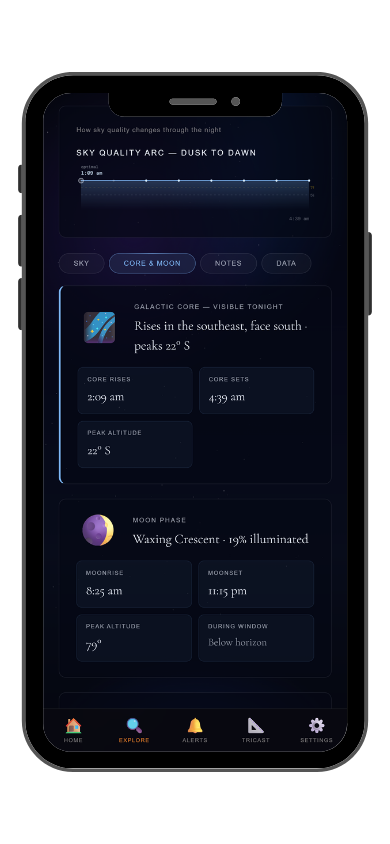
The galactic core is visible from late February through late October. Yosemite's Glacier Point Road typically opens in late May or early June and closes in autumn, making summer the prime high-elevation access season. Glacier Point is most productive for Milky Way astrophotography from May through September, with the core rising above the Nevada Falls area and arching over Half Dome in a composition that defines the genre for many photographers. Bass Lake is accessible year-round and provides a lower-elevation alternative during shoulder season. Oakhurst's position at the park's southern entrance makes it the most practical overnight base for dedicated Glacier Point night sessions.