Frequently asked
Is tonight good for stargazing at the Oregon Outback?
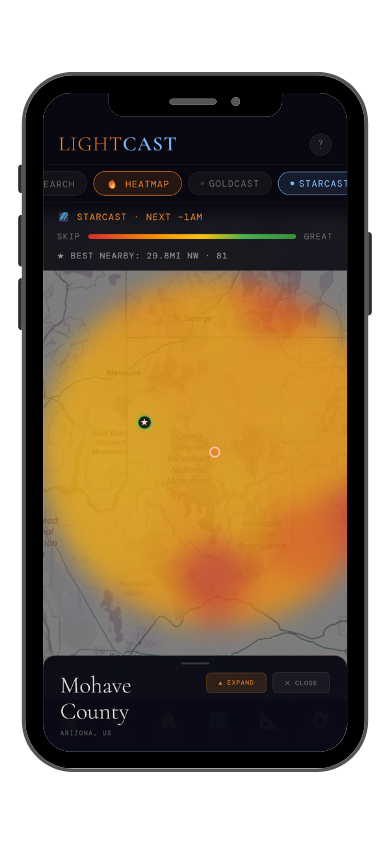
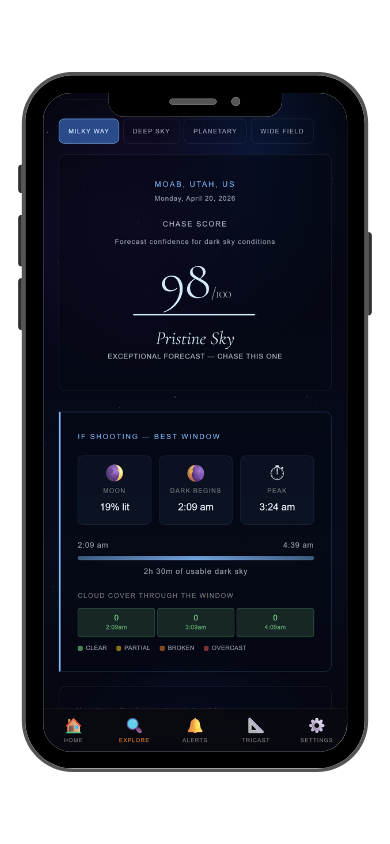
The live score above pulls today's forecast and runs it through StarCast's scoring model, factoring in cloud cover, moon illumination, Bortle class, humidity, and atmospheric transparency. Above 70 is an excellent night. Below 40, conditions are poor. The score updates daily.
What makes the Oregon Outback good for astrophotography?
The Oregon Outback International Dark Sky Sanctuary, designated in 2024, is the world's largest International Dark Sky Sanctuary, covering 2.5 million acres of high desert in southeastern Oregon with plans to expand to 11.4 million acres. It sits under Bortle Class 1 conditions across most of its range. The sanctuary encompasses remote BLM land in the high desert basin and range country between the Cascade Range and the Idaho border, with no significant population centers within a vast radius. The Oregon DarkSky Network supports the sanctuary with Night Sky Adventure Kits available through regional libraries and hosts regular star parties with astronomy experts. The open playa landscapes, rimrock formations, and dry lake beds provide flat, unobstructed horizons in every direction.
When is the Milky Way visible at the Oregon Outback?
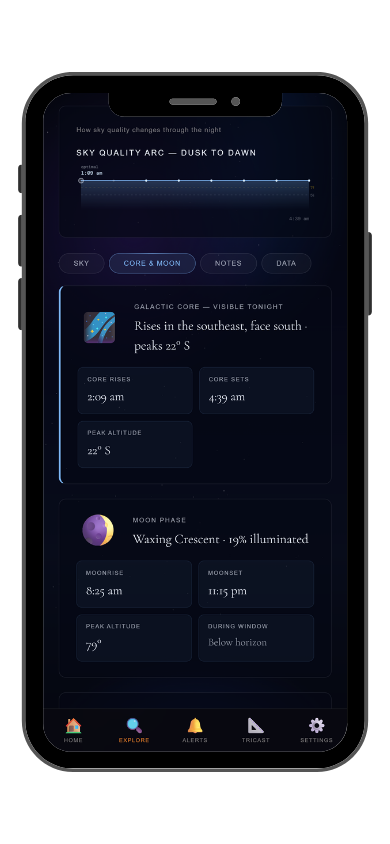
The galactic core is visible from March through October, with the high desert most reliably accessible and driest from late spring through fall. The region receives some of the lowest annual precipitation in Oregon, keeping atmospheric transparency consistently high. Roads within the sanctuary are primarily unpaved BLM routes requiring a high-clearance vehicle. Services are extremely limited in this part of Oregon, so fuel and supplies should be arranged in Lakeview or Burns before entering.