Frequently asked
Is tonight good for stargazing at Organ Pipe Cactus?
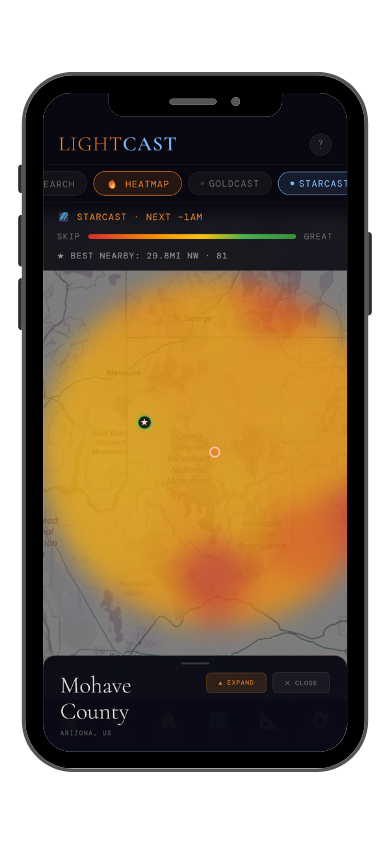
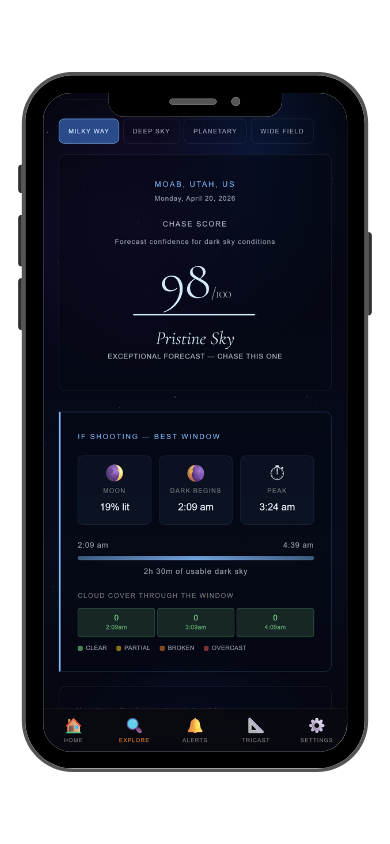
The live score above pulls today's forecast and runs it through StarCast's scoring model, factoring in cloud cover, moon illumination, Bortle class, humidity, and atmospheric transparency. Above 70 is an excellent night. Below 40, conditions are poor. The score updates daily.
What makes Organ Pipe Cactus good for astrophotography?
Organ Pipe Cactus National Monument on the Arizona-Mexico border has some of the most pristine dark skies in the United States, with Bortle Class 2 conditions across most of the monument. The park employs a dedicated dark sky ranger who hosts regular constellation tours and telescope viewings during the winter season from December through mid-April. Designated telescope viewing pads at the Twin Peaks Campground and Pinkley Peak Picnic Area provide level, lit-appropriate platforms. The organ pipe cacti, found nowhere else wild in the US, create an iconic foreground silhouette. The monument's extreme southern location means the galactic center rises high, and the dry Sonoran Desert climate delivers clear skies on most nights.
When is the Milky Way visible at Organ Pipe Cactus?
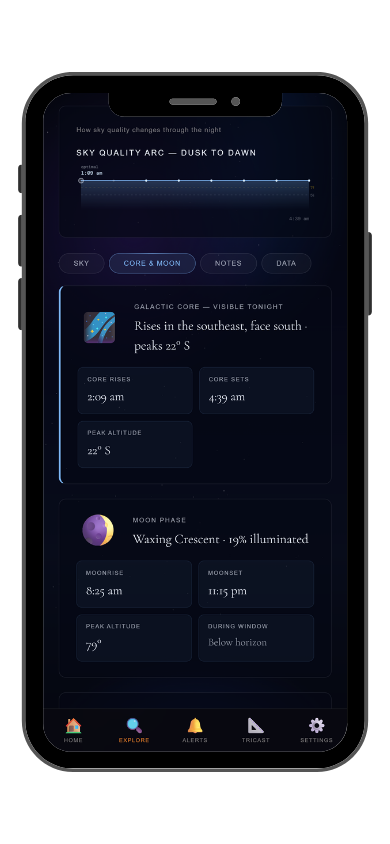
The galactic core is visible from March through October. The best overall conditions for visiting are winter, November through April, when temperatures are comfortable, humidity is lowest, and the ranger-led dark sky programs run. Summer brings extreme heat exceeding 110°F and occasional monsoon activity, though nights can still be excellent when clear. The monument's southern latitude gives excellent galactic center altitude during peak season.