Frequently asked
Is tonight good for stargazing in Owens Valley?
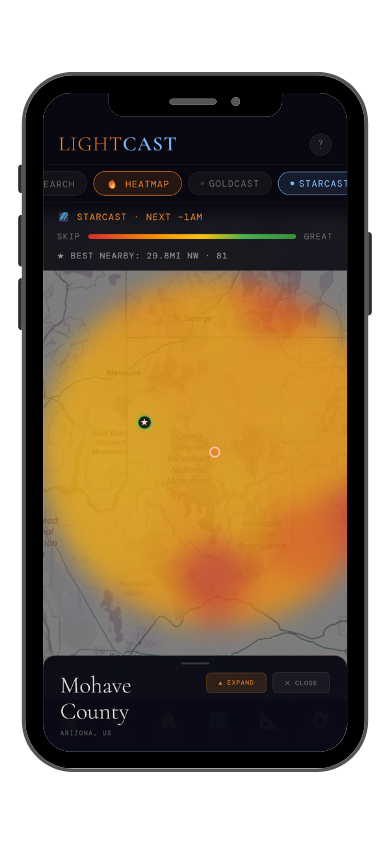
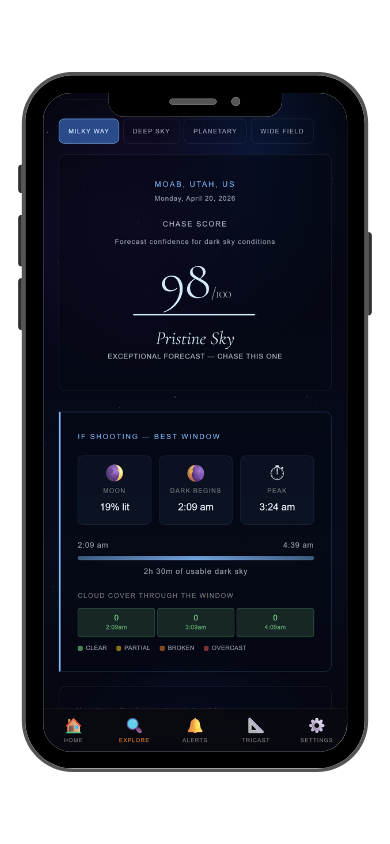
The live score above pulls today's forecast and runs it through StarCast's scoring model, factoring in cloud cover, moon illumination, Bortle class, humidity, and atmospheric transparency. Above 70 is an excellent night for astrophotography. Below 40, conditions are poor. The score updates daily.
What makes Owens Valley good for astrophotography?
Owens Valley runs between two major mountain ranges in eastern California, the Sierra Nevada to the west and the White and Inyo Mountains to the east, with Mount Whitney, the tallest peak in the contiguous United States at 14,505 feet, visible from the valley floor. The Alabama Hills, a jumble of rounded granite boulders near Lone Pine, sit right at the base of the Sierra and are one of the most photographed foregrounds in California night photography. With the Sierra blocking coastal moisture and very little development along the valley, skies here typically reach Bortle Class 2 to 3.
When is the Milky Way visible in Owens Valley?
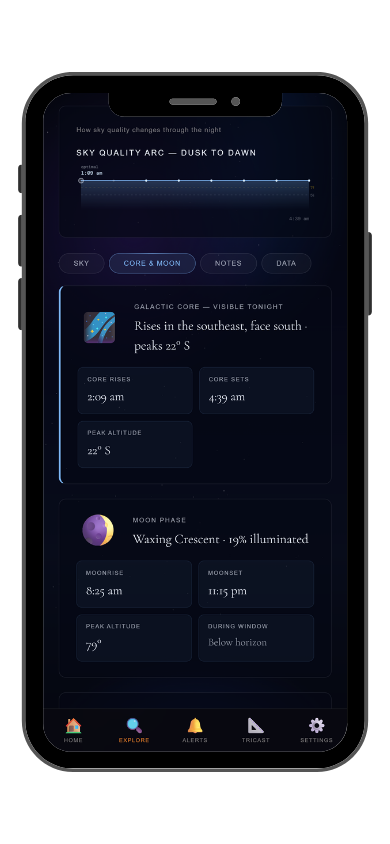
The core is visible from March through October. Late spring and early fall tend to bring the clearest, most stable air, while summer can occasionally bring afternoon thunderstorm buildup off the Sierra, along with added humidity from snowmelt runoff lower in the valley. Winter offers exceptionally sharp, dry air for wide constellation shots even though the core itself is below the horizon.