Frequently asked
Is tonight good for stargazing at Petrified Forest?
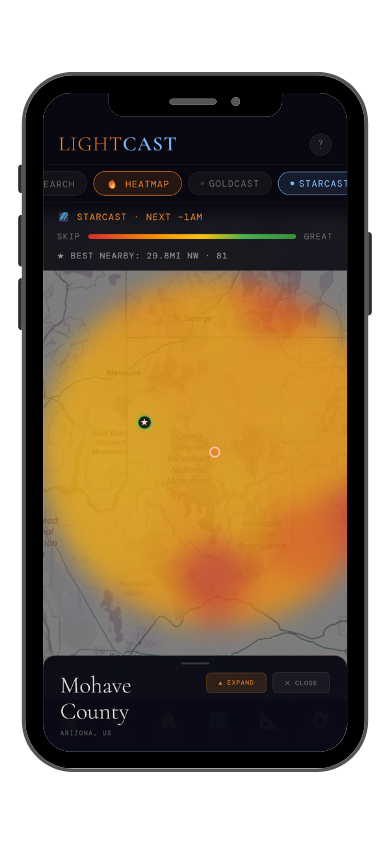
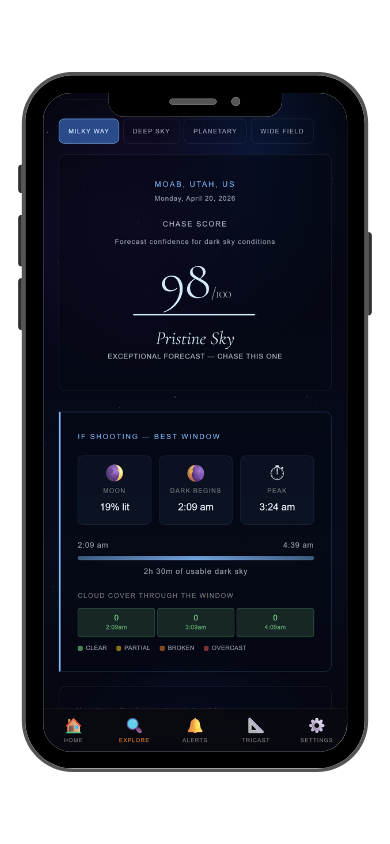
The live score above pulls today's forecast and runs it through StarCast's scoring model, factoring in cloud cover, moon illumination, Bortle class, humidity, and atmospheric transparency. Above 70 is an excellent night. Below 40, conditions are poor. The score updates daily.
What makes Petrified Forest good for astrophotography?
Petrified Forest National Park sits at approximately 5,400 feet in the high desert of northeastern Arizona, far from any major city. The park holds an International Dark Sky Park designation and produces Bortle Class 1 to 2 conditions: among the darkest accessible skies anywhere in the continental United States. The Painted Desert badlands, 225-million-year-old fossilized logs, and colorful layered formations create foreground subjects with no equivalent at other dark sky sites. The park offers free Dark Sky Viewing Permits, limited to two per day, for after-hours access. The desert climate means clear, dry skies on the vast majority of nights throughout the year.
When is the Milky Way visible at Petrified Forest?
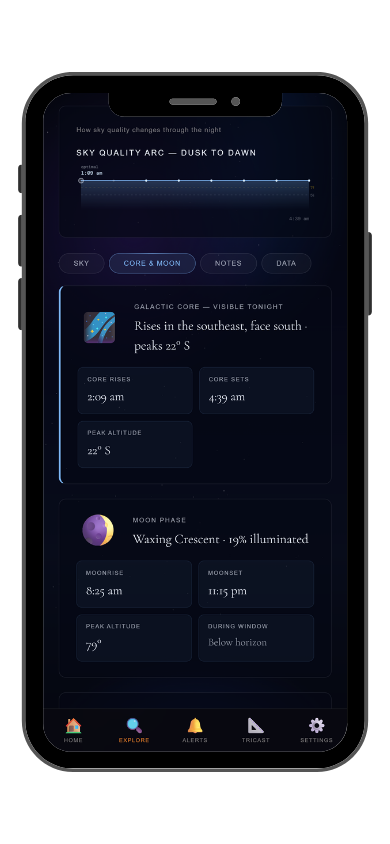
The galactic core is visible from March through October. The park is open daily from 8 AM to 5 PM, but Dark Sky Viewing Permits allow after-hours access for permitted holders. Only two permits are issued per day on a first-come, first-served basis at the Visitor Center. Fall and winter deliver the clearest, driest conditions and fewer visitors. Summer brings good galactic core visibility but requires timing around the monsoon pattern.