Frequently asked
Is tonight good for stargazing at Porcupine Mountains?
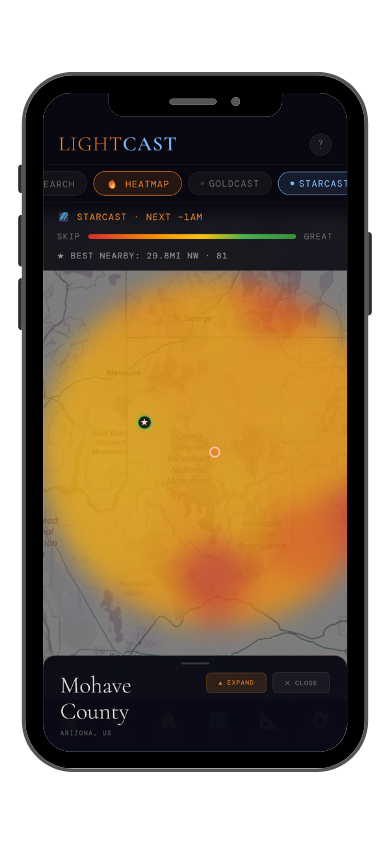
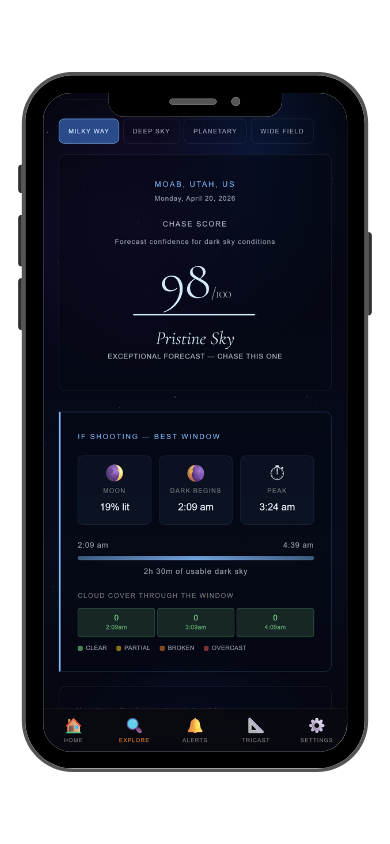
The live score above pulls today's forecast and runs it through StarCast's scoring model, factoring in cloud cover, moon illumination, Bortle class, humidity, and atmospheric transparency. Above 70 is an excellent night. Below 40, conditions are poor. The score updates daily.
What makes Porcupine Mountains good for astrophotography?
Porcupine Mountains Wilderness State Park in Michigan's Upper Peninsula is the largest state park in Michigan and one of the best dark sky destinations in the Great Lakes region. Lake of the Clouds, visible from a high escarpment overlook, is the signature composition: a still mountain lake reflecting the Milky Way with old-growth hardwood forest surrounding it. The park sits well north of major population centers, and Lake Superior to the north and west adds to the darkness by eliminating any light sources in those directions. The area also sits within the auroral oval during solar maximum years, making it viable for aurora photography.
When is the Milky Way visible at Porcupine Mountains?
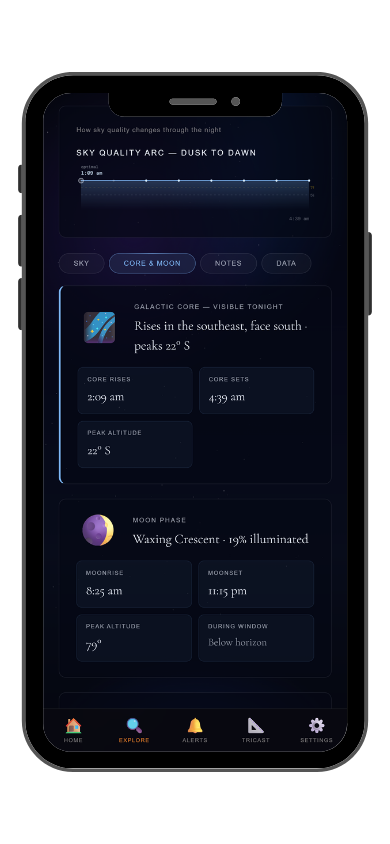
The galactic core is visible from March through October. Summer (June through August) is the most reliable clear-sky window, though cloud cover from Lake Superior weather systems can move in quickly. Aurora activity is worth monitoring year-round: the Porcupine Mountains are far enough north that significant geomagnetic events produce visible aurora several times per year. Fall colors and Milky Way overlap in late September and early October, though the core is low and the window is short.