Frequently asked
Is tonight good for stargazing at Rainbow Bridge?
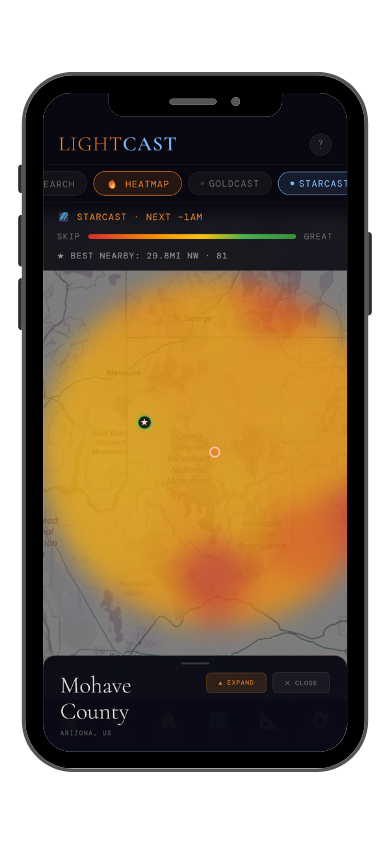
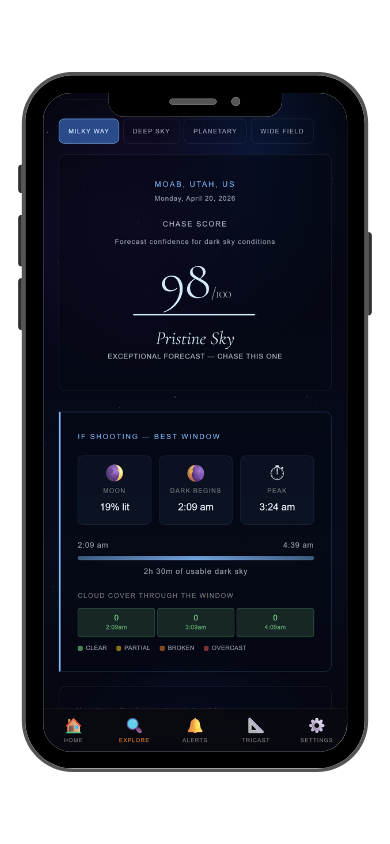
The live score above pulls today's forecast and runs it through StarCast's scoring model, factoring in cloud cover, moon illumination, Bortle class, humidity, and atmospheric transparency. Above 70 is an excellent night. Below 40, conditions are poor. The score updates daily.
What makes Rainbow Bridge good for astrophotography?
Rainbow Bridge National Monument protects one of the largest natural arches in the world, a 290-foot sandstone span in an extremely remote canyon system in southern Utah. The surrounding Colorado Plateau landscape sits under Bortle Class 2 conditions, the same dark sky quality as the adjacent Glen Canyon National Recreation Area. The extreme remoteness, accessible only by boat across Lake Powell or a long overland hike through Navajo Nation land, keeps the site uncrowded and light-free. The arch itself, sacred to several Native American peoples, frames the night sky in a way no other structure in the world can duplicate. Overnight camping near the monument requires permits and coordination with Navajo Nation land access rules.
When is the Milky Way visible at Rainbow Bridge?
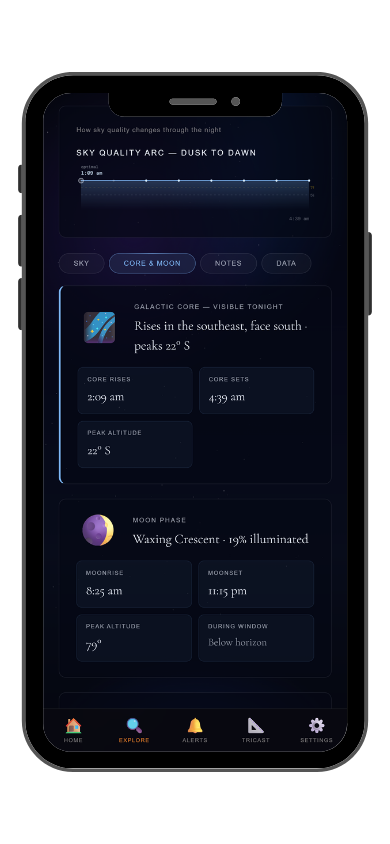
The galactic core is visible from March through October, with May through August the peak window. The Colorado Plateau's dry desert climate keeps conditions excellent on most clear nights. Lake Powell boat access is the most common approach, with tour boats running from Wahweap Marina near Page, Arizona. The hike-in approach covers roughly 14 miles each way through remote terrain requiring permits on Navajo land. Planning significantly in advance is required for either access route.