Frequently asked
Is tonight good for stargazing in the Ruby Mountains?
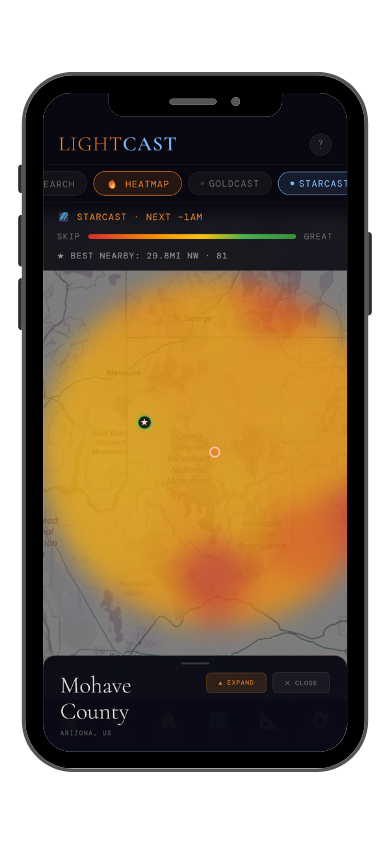
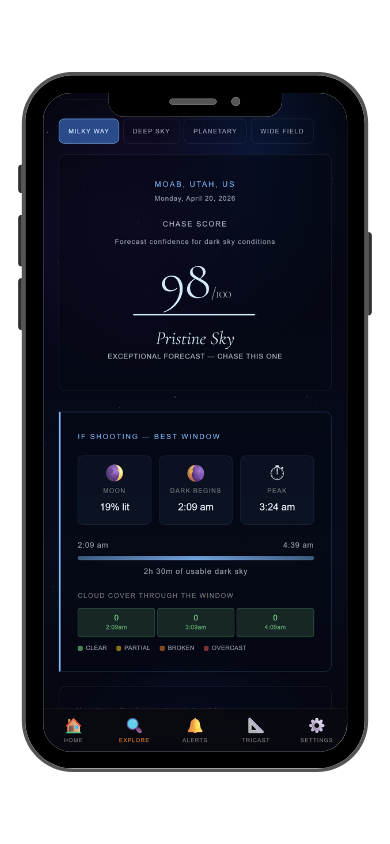
The live score above pulls today's forecast and runs it through StarCast's scoring model, factoring in cloud cover, moon illumination, Bortle class, humidity, and atmospheric transparency. Above 70 is an excellent night for astrophotography. Below 40, conditions are poor. The score updates daily.
What makes the Ruby Mountains good for astrophotography?
The Ruby Mountains rise dramatically out of the high desert near Elko in northeastern Nevada, earning the nickname Nevada's Alps for their glacially carved granite peaks and string of alpine lakes. Lamoille Canyon, a U-shaped glacial valley accessible by paved road, is the range's most photographed corridor, with waterfalls and wildflower meadows leading up toward Island Lake and Lamoille Lake. Rural Nevada is one of the most sparsely populated states in the country, and that emptiness gives the Rubies skies reaching Bortle Class 1 to 2, among the darkest measured anywhere in the Lower 48.
When is the Milky Way visible in the Ruby Mountains?
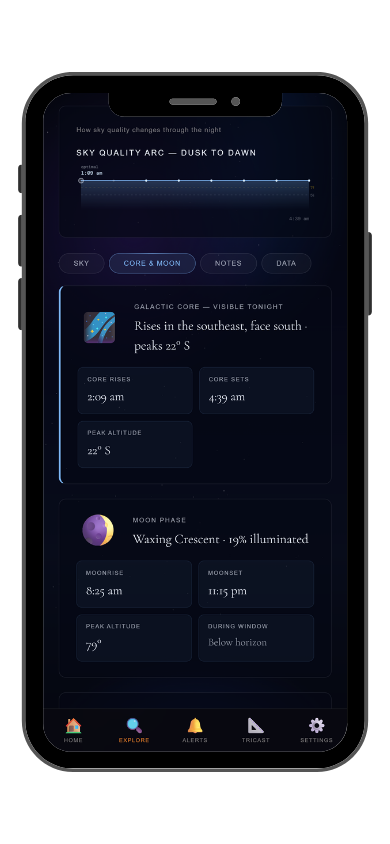
The core is visible from March through October. The higher trailheads and lakes along Lamoille Canyon typically hold snow into June, so July through September is the most dependable window for shooting in the alpine core of the range. Nights are cold even in summer at these elevations, and afternoon thunderstorms can build over the peaks, so plan around a clear evening forecast before heading up the canyon.