Frequently asked
Is tonight good for stargazing at Senja?
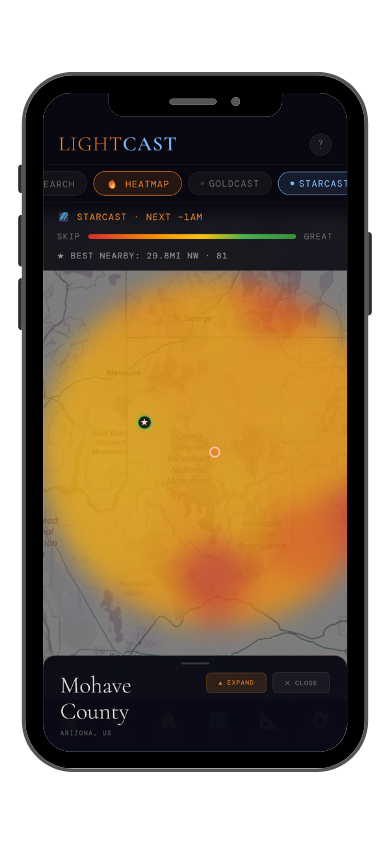
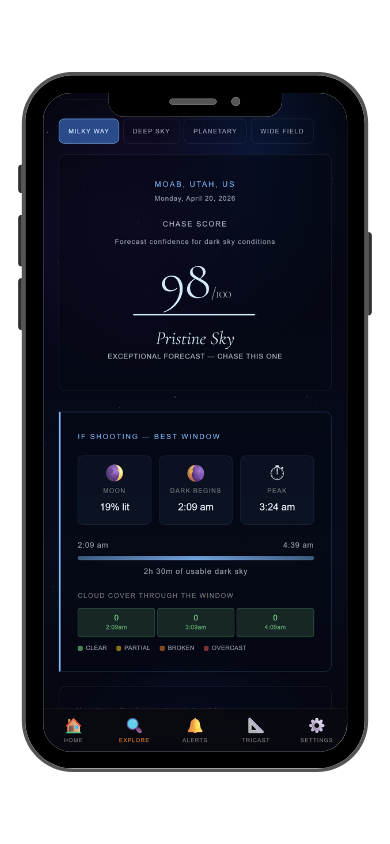
The live score above pulls today's forecast and runs it through StarCast's scoring model, factoring in cloud cover, moon illumination, Bortle class, humidity, and atmospheric transparency. Above 70 is an excellent night. Below 40, conditions are poor. The score updates daily.
What makes Senja good for astrophotography?
Senja is Norway's second largest island, at 69 degrees north in Troms county, and is consistently cited as one of the most scenically dramatic locations in Norway: the western side of the island drops from 1,000-meter granite peaks directly into the Norwegian Sea with no coastal plain. The Tungeneset viewpoint and Ersfjordbotn fjord are among the most recognizable aurora photography foregrounds in Scandinavia. The island is large enough to have weather variation between its sheltered eastern side and exposed western coast, giving photographers options when conditions change. Tromsø is 90 kilometers to the northeast and produces minimal light impact on the island.
When is the Milky Way visible at Senja?
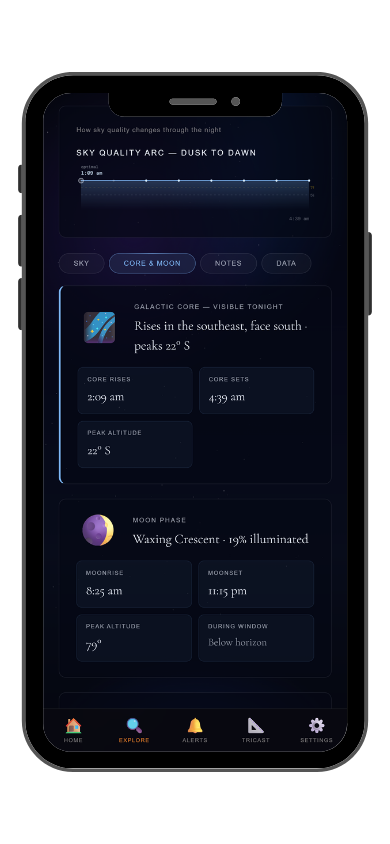
The midnight sun prevents darkness from late May through mid-July. Astronomical darkness returns in late August, and from then through April, the night sky is the main draw. The Milky Way core is below the southern horizon for most of the winter and is a secondary consideration: aurora photography is the primary reason to visit Senja. October through February gives the longest, darkest nights, and the island's position deep inside the auroral oval means major displays occur multiple times per season.