Frequently asked
Is tonight good for stargazing at Serengeti National Park?
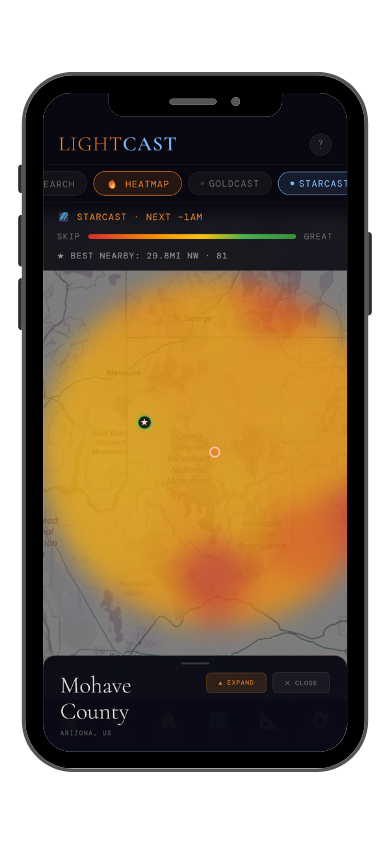
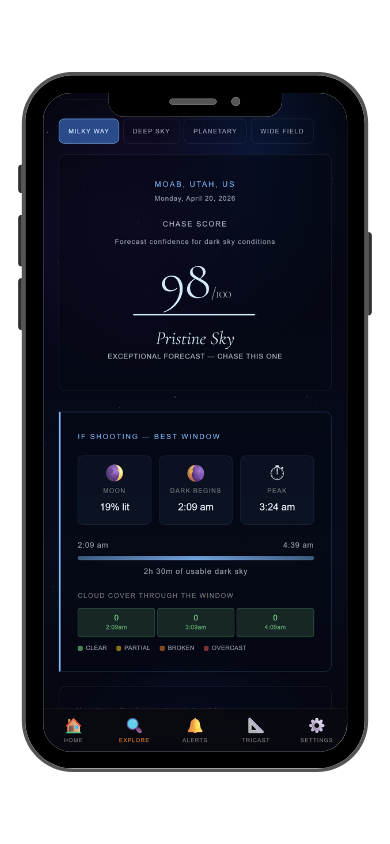
The live score above pulls today's forecast and runs it through StarCast's scoring model, factoring in cloud cover, moon illumination, Bortle class, humidity, and atmospheric transparency. Above 70 is an excellent night. Below 40, conditions are poor. The score updates daily.
What makes Serengeti National Park good for astrophotography?
The Serengeti in northern Tanzania is one of the most iconic wilderness landscapes on Earth, home to the greatest wildlife spectacle remaining on the planet. Located near the equator with no major cities within hundreds of miles, the Serengeti's vast open savanna records Bortle Class 1 to 2 skies with completely flat, unobstructed horizons in all directions. At this near-equatorial latitude, both northern and southern constellations are visible, and the Milky Way passes directly overhead, appearing as a nearly vertical band from horizon to horizon. The silhouettes of acacia trees, granite kopjes (rocky outcrops), and — potentially — lions, elephants, and wildebeest under the Milky Way create a combination of natural history and astronomical beauty found nowhere else on Earth.
When is the Milky Way visible at Serengeti National Park?
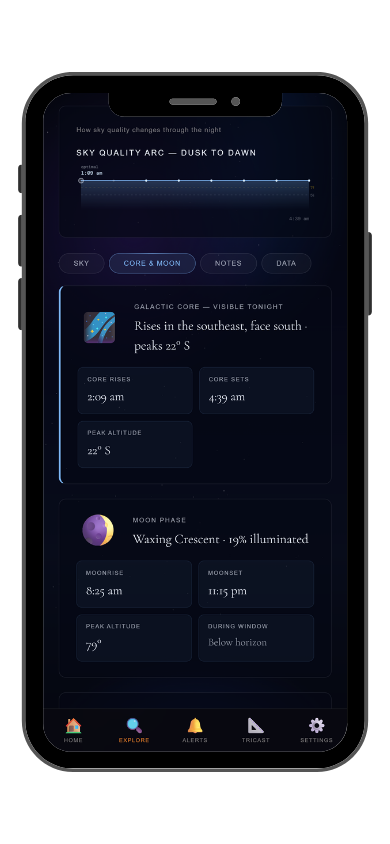
At the Serengeti's near-equatorial latitude, the galactic core is visible year-round and rises to nearly overhead positions, providing extraordinary overhead compositions. The dry season from June through October delivers the most reliable clear nights and coincides with the famous wildebeest migration's river crossing phase in the northern Serengeti. The short rains in November and long rains from March through May reduce clear night frequency. The Great Migration's calving season in the southern Serengeti from January through March coincides with the inter-rainy-season window and can offer both wildlife and astronomy opportunities in the same visit.