StarCast · Shenandoah, VA

Night Sky Tonight in Shenandoah

Reading tonight's sky conditions…
/ 100
Moon
Dark window
Galactic core
Conditions
Tonight
Bortle class
LightCast
Now on iOS
LightCast Suite
Push alerts · 3-day forecast · nearby dark skies

Get notified before clear nights. Set your threshold once and never miss a prime shooting window again.

Download on the App Store
7-day free trial · $2.99/mo · Cancel anytime in App Store
Learn more →

What's in the score
Cloud cover
Moon illumination
Bortle class
Transparency
Humidity

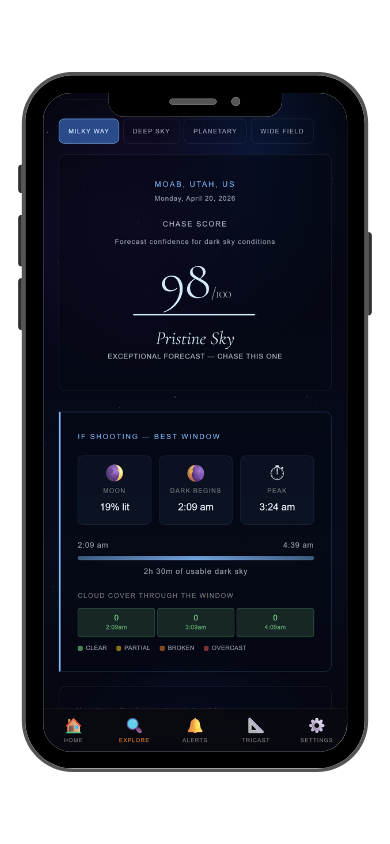
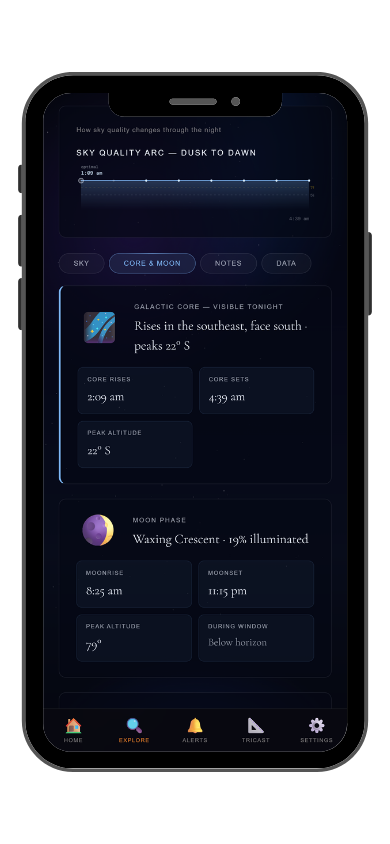
What the app shows you
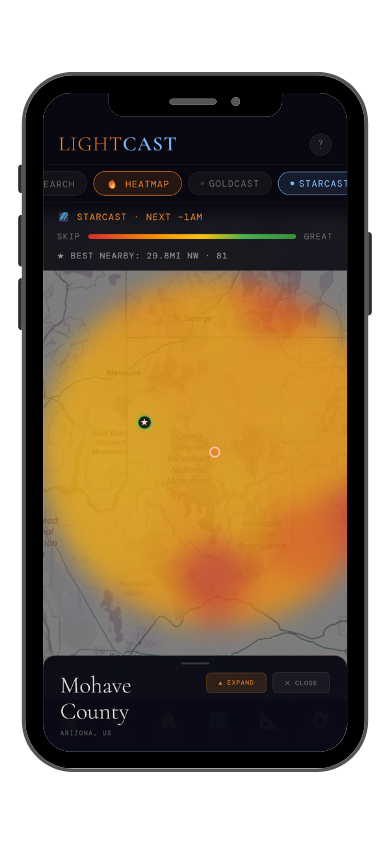
StarCast galactic core forecast
Nearby dark sky locations

Live scores for the night sky, Milky Way Core windows, darker skies nearby, & more
Get LightCast Suite on iOS


Frequently asked
Is tonight good for stargazing at Shenandoah?
The live score above pulls today's forecast and runs it through StarCast's scoring model, which factors in cloud cover, moon illumination, Bortle class, humidity, and atmospheric transparency. Above 70 is an excellent night. Below 40, conditions are poor. The score updates daily.
What makes Shenandoah good for astrophotography?
Shenandoah is one of the closest dark sky destinations to the Washington DC and Northern Virginia metro areas, making it a practical option for photographers who can't travel far. Skyline Drive runs the length of the park along the Blue Ridge crest, with over 70 overlooks that face both east and west. The ridge elevation puts you above valley haze, and the overlooks eliminate the need to hike into position in the dark. Big Meadows is the park's most popular night sky spot: an open high-elevation clearing with minimal tree obstruction and a good southern horizon.
When is the Milky Way visible at Shenandoah?
The galactic core is visible from April through October. Fall is the best season: humidity drops significantly after Labor Day, Skyline Drive is less crowded, and the foliage adds foreground color. Summer weekends at Big Meadows fill up fast; mid-week visits in August on new moon nights offer the best combination of dark skies and manageable crowds. Light pollution from the DC metro glow affects the northeastern horizon, so composing south or southwest gives cleaner sky.